Categories
acoustic guitar Arts & Entertainment Issues life memories songwriting

‘For A Dancer’: Life Lessons in Jackson Browne’s Lyrics

Jackson Browne wrote “For A Dancer” in memory of a modern dancer friend who died tragically in a fire. When Jackson’s wife, the model Phyllis Major, died suddenly in 1976, “For A Dancer” mysteriously took on a new meaning. “That’s how songs work,” Brown said in an interview. “They migrate into other parts of your life and other experiences.”

Browne eventually played the song at the funerals of two other celebrity friends. And if one listens to the lyrics closely, “For A Dancer” becomes a larger commentary on the intransience of life itself. We cling to it like a thread, and nothing is certain.

To me, the larger meaning of the song underscores the necessity of using every precious moment wisely. Here’s my cover.

Categories
Arts & Entertainment memories Music paintings

Empty Chairs: A Beautiful Song About Love And Loss

Like many of us, Don McLean suffered through difficult passages in his life, many of which are reflected in his music. He wrote and recorded “Empty Chairs” when his marriage was failing. Despite the subject of lost love, I feel there is incredible beauty in the lyrics and the melody, and Mclean’s unique guitar style.

Although the subject is mentioned just once in the song, McLean chose the symbol to sum up his feelings and state of mind at the time. The title is inspired by Vincent Van Gogh’s paintings of empty chairs. Mclean sympathized with Van Gogh and admired his paintings as revealed in his song “Vincent” recorded on the same album: “American Pie.”

I’ve re-recorded “Empty Chairs” with a better guitar and some improved technique. Please enjoy listening.

Categories
Arts & Entertainment life memories Music

Fill My Eyes

Cat Stevens rose to prominence as a folk and pop artist in the 1970’s. I’ve always enjoyed the thread of childlike innocence and spontaneity that runs through his music. After a near-death experience, Stevens began a serious search for a deeper meaning in life. In 1977, he left his rock and roll lifestyle and converted to Islam adopting the name Yusuf Islam.

Stevens released “In My Eyes” in April of 1970, years before his conversion. Like many of his songs, it is simple yet extremely poignant. It speaks of the impermanence of human love and of life itself. Paradoxically, “Fill My Eyes” flows like a sweet river and the meter is upbeat.

Here’s my cover of the song played in Yusuf/Stevens’ unique guitar style.

Categories
Arts & Entertainment folk music memories Music

The Clancy Brothers: Re-Imagining Irish Folk Music

The Clancy Brothers Wore Aran Jumpers On Stage
A Little Boy Wearing an Aran Jumper

Paddy and Tom Clancy came to America intending to develop lucrative acting careers. Little did they know they were destined to succeed enormously in the music business while making a tremendous contribution to the form, awareness, and appreciation of classic Irish folk music.

After arriving in Greenwich Village in 1951, the enterprising duo quickly established themselves as successful Broadway, Off-Broadway, and television actors. During this period, the brothers also created their own theater production company which they named: “Trio Productions.” To help raise money for the new company, Tom and Paddy sang old Irish folk songs they had learned as children. They rented The Cherry Lane Theater in the Village and performed shows regularly on Saturday nights. Soon, they were joined by notable folk singers like Pete Seeger, Woody Guthrie, and Jean Ritchie.

Liam, the youngest of the three brothers, came to America in 1956. He joined his brothers in the singing group, along with his good friend, Tommy Makem. The group came to be known simply as “The Clancy Brothers and Tommy Makem.” The group distinguished themselves with their rousing style of singing Irish folk songs and ballads, while staying true to some of the slower and more mournful tunes.

The group adopted a trademark uniform after their mother, it is said, read about the inclement New York winters. She sent her boys Aran jumpers (sweaters) to keep them warm. The boys wore the sweaters for the first time at the Blue Angel nightclub in Manhattan as part of their regular winter attire. The group’s manager, Marty Erlichman, had been searching for a kind of logo-look for the group. When he saw the sweaters, he knew he had found the “special look” he was searching for. Erlichman asked the group to wear the sweaters for their first TV appearance on the Ed Sullivan Show. After that appearance, the Clancy Brothers and Makem wore the sweaters whenever they performed.

The Sullivan TV appearance aired to an audience of forty million. The TV show and the group’s nightclub appearances attracted the attention of a Columbia Records executive. They signed a $100,000 recording contract (a staggering sum at the time) with Columbia and recorded seven albums with the studio. While the members of the group changed from time to time, their success and influence on modern folk music has endured. In all, the group recorded 24 albums on various labels. In 1964, their albums accounted for one third of all the record albums sold in Ireland.

I first saw the Clancy Brothers at Carnegie Hall when I was a callow lad of seventeen. I went to the concert with my best friend. He remains my best friend today, even though he is half a world away. The song I’m about to sing has two names: “Will Ye Go Lassie Go” and “The Wild Mountain Thyme.” It’s a Clancy Brothers favorite. This one’s for you, Danny Boy.

Categories
current events essays inspiration Issues memories profiles

Wasn’t That a Time?

Wasn’t that a time?  Wasn’t that a time to try the souls of men?  Wasn’t that a terrible time?”

The lyrics from a sixties folk song made popular by Peter Paul and Mary reverberate through the decades and remain relevant today.

Unfortunately.

The lyrics to the folk song hearken back to the war for American independence and major conflagrations waged since including World Wars I and II.

I recently bought an album by Tom Paxton.  Listening to his music on YouTube brought me back to the turbulent sixties and my love for the folk artists who became popular then.  Listening to these songs of social conscience and satire, love ballads, Children’s songs and others that reflect beautifully, poignantly and heart fully on our human experience, I am struck by the purity of this music.  It moves me deeply.  It penetrates my soul.  It inspires me to pick up my guitar and sing.

Looking back, I realize that these artists, these wandering troubadours, were great men and women.  Some of them are still alive and singing.  What a time the sixties were.  What noble visions for a better world, given voice by these passionate musicians, arose from the struggle.

Some of these visions have been realized.  We live in a better world today in some respects.  Yet we haven’t yet learned our lessons.  We live in a world where human beings still murder other human beings in the name of God.  We live in a world where a Russian President is intent upon restoring Russia to its Cold War boundaries by invading autonomous neighbor states.  We live in a world where hatred and intolerance still threaten our very existence.

When will they ever learn,” Mary Travers sings plaintively.  When, indeed, will we ever learn?

David Gittlin has written three feature length screenplays, produced two short films, and published three novels. Before quitting his day job, he spent more than thirty years as a marketing director building expertise in advertising, copy writing, corporate communications, collateral sales materials, website content/design and online marketing.


Categories
essays memories musings nostalgia profiles

Sunday Nights With Shep

In his prime, Jean Shepherd hypnotized audiences for hours with stories about bumper stickers, TV commercials, Green Stamps, and the Good Housekeeping Seal of Approval.  Like most great discoveries, I found Jean Shepherd purely by accident.  Sunday nights presented a precarious dilemma until Jean came along.  I didn’t want to close my eyes because the next thing you knew, the sun would be pinching my cheek.  It would be Monday morning, the beginning of another week of Junior High School.

My primary goal, therefore, centered upon pushing Monday morning as far into Sunday night as my sleep-deprived brain permitted.  My pre-Jean Shepherd solution to the Sunday night dilemma involved listening to Rock and Roll music on a radio underneath the covers.  One night, while switching from one Rock and Roll station to another, I found “Shep.”

The experts at the time might have called it “experimental radio.”  Whatever it was, I had never heard anything like the smooth jazz overlaid by that voice, the one that put an arm around my shoulder and whispered, “c’mon pal, I got some cool places to take you to.”

When I first tripped over the threshold of this new world, the silky voice in the night was talking about cigarette coupons.  It told a story about two friends who “made the same dough,” yet one of them had a new TV, and a boat, and a Ford Mustang, and a vacation home in the country—all purchased with cigarette coupons.  It soon became clear to the other sad sack that he was an idiot not to smoke “Wonkies,” the brand with the coupons, the kind his buddy smoked.  Of course the poor slob who smoked the Wonkies was dying of cancer, but it didn’t matter, because he had been smart enough to get the boat, and the car and the vacation home for free.  He had enjoyed a lifetime of smoking Wonkies, and now his family could use the boat and the other goodies after he died.

The music swelled a bit louder.  Now the voice talked about life on other planets.  Did the inhabitants have better bathrooms than ours?  Did the people have jobs, or could they just go to the bank and ask the teller for as much money as they needed to feed and clothe their families, with enough left over to go to an amusement park or take a quick vacation on another planet.  Everyone had to be on the honor system, or there wouldn’t be enough money to go around.  But these were aliens, after all, not human beings, so there would probably be no problem.

The voice kept talking.  It swept me away.  I lay there listening to my radio.  I felt like a five-year-old kid attending the circus for the first time with his Dad.  The world outside was crazy as hell, but I had it made in the shade, hypnotized by another one of Jean Shepherd’s stories.  Monday morning had disappeared over the horizon—miles, and miles, and miles down the road.

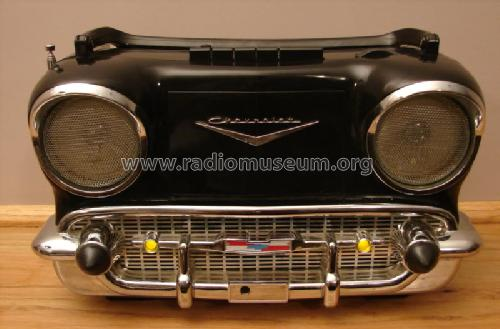
1950’s Radio. Image Source: http://www.radiomuseum.org

Categories
inspiration life memories musings profiles reflections Uncategorized

Silver Sunsets

“The last shall be first.”

When the horses reached the quarter pole, just before turning for home, Silver Sunsets galloped contentedly, exactly where he wanted to be — in last place, thirty lengths out of the lead.

Casual bettors, who picked Silver Sunsets by his number or the way he looked in the post parade, are tearing up their tickets in disgust.  In thirty seconds, they will regret this act.   They will watch, in utter amazement, as Silver Sunsets begins a furious stretch run, weaving in and out of traffic, passing horses as if they were standing still, crossing the finish line in first place.

Silver Sunsets was a top-ranked thoroughbred during his two-year old and three-year old racing seasons.  I remember him now, twenty years later, because of the lessons he taught me.  Be yourself and; it is never too late to do your thing.

Categories
essays memories musings profiles reflections Uncategorized

Impressions of Sedona

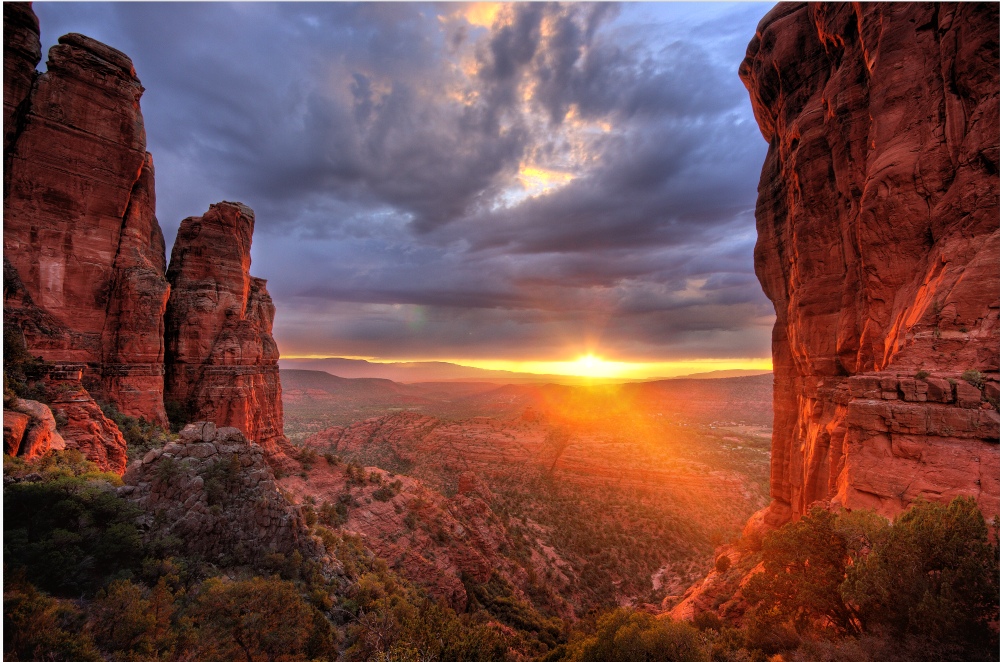
Majestic and Magical Sedona

I turn left on the two-lane road leading to the town of Sedona.  The world outside transforms into something much different than the one I am accustomed to. 

Towering red-rock Mountains appear unexpectedly.  The striped hills are radically different from the ordinary-looking mesas overlooking the surrounding terrain.  For the first time, the advertisements promoting this area ring true.  I get the distinct impression there is something special here.  There is suddenly hope the three thousand mile plane ride and the hotel suite awaiting my wife and I will prove to be a wise investment after all.

Sedona is a spiritual spa for die-hard vacationers as well as world-weary travelers searching for a way to resurrect their lives from an assortment of disappointments and failures.  I am not here to seek advice from healers, psychic or life counselors.  I am here to discover the heart and soul of this city out of time without the help of a tour guide.

Sedona is amazingly clean.  There are no signs of litter in the streets or sidewalks, no unsightly garbage dumps to mar the town’s bright aura.  The buildings, homes and streets all look brand new.  Most of the architecture is a sort of southwest modern with earth tone colors alternating with pastels.  It seems as though a beautiful, uniquely designed church abides on every street corner.  No two homes look alike, yet no building seems out of place.  There is an underlying unity of design but not at the expense of individuality. 

The single-story adobe-style homes at street level and the larger mansions in the mountains have no bars on their yawning windows.  They all look expensive, probably worth hundreds of thousand dollars each upwards into the millions.  Incredibly, you don’t see gates in front of the winding driveways.  There are no traffic lights clogging the two-lane road running throughout the town.  Instead, they have what the locals call “round-a-bouts.”  Here, the visitor finds an honor system where vehicles yield to the one reaching the four-way intersection first.  Anyone who doesn’t obey the code is sure to be a tourist.

I spend most of my time here in art galleries and walking around slack jawed, agape at the rock formations, multi-colored mountains, and fiery sunsets.  I feel “buzzed” every waking moment.  Even shopping, which I normally hate, feels like an acid trip.  The town itself, I think, is one huge energy vortex.

Young people flock here as if drawn to the area by the magnetic power of the town’s famous energy vortexes.  Many of the transplants have fled small towns where they grew up throughout the west to taste big city life.  After living in places like Houston, Phoenix, and Santa Fe, they search for something else.  They find it in Sedona, where small city values couple with new vistas of financial and cultural opportunity. 

Everyone you meet here seems to be from somewhere else.  Heaven is likely to be quite similar, come to think of it.

Categories
essays humor life Making Changes memories reflections Uncategorized

The Not-So-Hidden-Truth About Starbucks

I am trying to write my second novel.  It is not easy, to say the least.  I am confident, however, that this is a universal truth among authors attempting to write their first or seventy-first long piece of fiction or non-fiction.  The reasons for this difficulty may vary from author to author.  My main roadblock seems to be the increasing disenchantment of sitting in a room all by myself for long periods of time.  Again, I suspect I am not alone in this predicament.  The problem apparently extends far beyond the relatively small segment of the population on planet earth attempting to write novels.  I know this because I have recently taken my laptop to a local Starbucks to resolve my isolation problem.

The Starbucks I now regularly inhabit is not your everyday Starbucks. Management recently retrofitted the place with long tables, benches actually, with stools and a strip of electrical outlets underneath to plug in battery cables.  Droves of people come here, not just to chat and caffeinate, but to do WORK! This includes college-students doing real, actual homework, not wasting time on Facebook.  Freelance, self- employed, and independent contractor types also hang out here.  These people, like myself, are hard at work, despite the distractions of noisy conversation and often-times idiotic, piped-in music.  I find this phenomenal and wonder,”Why do we come here?”  Many, if not all of us, are surely not homeless.

I can only speak for myself.  I come here to overcome loneliness—to make some sort of connection.  And I’m happy to report that my new strategy is paying off.  I’m writing my novel on a regular basis, slowly but surely.

Now that we may have some insight into the reason for the overwhelming success of the Starbucks chain, I would like to come to the point of this piece.  Many years ago, I began listening to Prem Rawat speak about an inner experience of peace and contentment.  At the time, I did not have to go to Starbucks to be around people.  I had a full time, good-paying job, a girlfriend, my parents and cousins to surround me.  Yet, something was missing.

Mr. Rawat’s message of peace captivated me in a way nothing had previously.  I followed up on his promise to reveal a source of peace and contentment within myself.  I practiced the techniques of what he calls Knowledge, and, to make a long story short, I have not been in the least bit disappointed.  Well, perhaps that statement is not entirely true.  I had the idea shortly after receiving the techniques of Knowledge that I would not need anything else, including people.  To make another long story short, that idea turned out to be foolish and a bit funny, now that I look back on it.

But there is a point here, somewhere.  Oh yes, here it is:  I need outer connections—with colleagues in my chosen profession, with friends and family, even Facebook connections. Thanks to the experience of Knowledge, I’ve learned that I need something else.  I need a connection with myself for my life to be complete.  I’m not going to put a name to what I’ll call “myself,” because I’ve learned that names are insufficient to describe it.  I will just say this:  I was looking for a missing piece of the puzzle of my life.  Prem Rawat helped me to find it.  Now, I feel my life is complete.  It is full, not stuffed with things on the outside, but from within.  And my connections on the outside are more fulfilling, because I am a more full and complete person, with more to offer to others.


Categories
essays fiction humor life memories profiles reflections

Zeda and the Jumping Fish

We sat on a flat rock overlooking the pond with the lines of our fishing poles dangling in the fresh water.  Actually, the poles we used were not real fishing poles.  They were made from tree branches strung with nylon lines and hooks my Zeda bought from a nearby bait and tackle shop.  My Zeda could not afford to buy real fishing poles, so he made them instead.  I didn’t mind.  He said they would work just fine.

The early morning sun glinted off the pond and the side view mirror of my grandfather’s 1953 Plymouth sedan.  The reflected light was so bright I had to squint to see.  My stomach rumbled.  I thought of the roll beef my mother had packed for lunch.  The roll beef and Kaiser roll sandwiches wrapped in wax paper sat in a brown paper bag next to my grandfather.  We had found one of the only shady places to sit in this tiny corner of the Essex County Reservation.  We had the pond all to ourselves.

“You said we would have a better chance of catching fish if we got here early.  I think you were right, Pop-Pop.”  I always called my grandfather Pop-Pop when I wasn’t calling him Zeda.

“The water is cool near the surface in the early morning,” Pop-Pop said.  “Fish like cool water.  They go deeper in the pond as the sun rises and the water near the surface gets warmer.”

“I hope we catch a lot of fish,” I said.

“A good fisherman is always patient, tateleh.  It is important to remain patient in any situation and twice as important when you are waiting for a fish to bite.”

I wasn’t used to sitting still for very long.  It was almost magical, however, how calm I could be when spending time with my Zeda.  I found everything that came out of his mouth interesting.  I loved the way he played the role of different characters in the stories he told.  He could do anything he put his mind to.  Right at the moment, he was fishing with one hand, reading from a small book in the other, and talking to me.

Something big crashed into the mirror of the pond’s surface.

“Pop-Pop.  I think a meteorite just fell.  We learned about them in school yesterday.  The big meteor comes into the atmosphere and breaks up.  Then smaller pieces fall out of the sky.”

“It’s not a meteorite, bubaleh.  The fish are happy.  They freulich in the water and jump out when the spirit moves them.”

“Wow,” I said.

There was a second splash about a hundred yards away.  “There goes another one.  I’ll bet they all start jumping now.”

“They aren’t going to make it that easy for us to catch them,” Pop-Pop said.  “Fish have more brains in their Kuphs than the average person gives them credit for.”

“If fish were stupid, it wouldn’t be fun to try and catch them, right Zeda?”

“Correct,” my boy.

“Could we go fishing every day before school and on the weekends too?”

“Well, we could go on any day during the week, but not on Saturday.  Saturday is for the mitzvah of observing Shabbas—something your parents seem to have forgotten, ankeleh.”

And so it went, back and forth between us the rest of the morning, until it was time to eat our delicious roll beef sandwiches.  We didn’t catch any fish that day.   I can’t say I was disappointed.