
Categories
Arts & Entertainment inspiration motivation Music

Speaking Love And Encouragement

“The time that’s left is yours to keep.” These words come at the end of the chorus of the song “See Here She Says” by Kate Wolf.

While I find all of the lyrics in this song beautiful, this sentence hit me in the center of my heart. I can picture a mother teaching a child about life. She is telling the child about the importance of dreams and to use his or her time wisely. Use it well, not only for yourself but for others.

Certainly, love, beauty, and a full range of human emotions come through Kate Wolf’s music. “See Here She Says” is a remarkable song because it speaks to children and adults alike with an ocean of love and understanding. Interestingly, the word “sea” appears at the beginning of the first verse.

Perhaps I can feel Kate’s heart even more now that she has passed into spirit.

Please enjoy my cover of “See Here She Said.”
Categories
artists Arts & Entertainment folk music Music

The Summer Side of Life

“Summer Side of Life” is the lead-off song from a 1972 Gordon Lightfoot concert in London, England. The song kept rolling around in my head until I decided to learn it and post it here.

Ostensibly, the song is about a young man who returns from the Vietnam War and mourns a lost love and possibly his war experiences. It’s a song about before and after, and maybe two sides of life. After the first two verses, I find the lyrics to be somewhat impenetrable. So, I can’t say for sure what the song is about, but it speaks to me about the difference between youth and old age.

I’d love to have my youth back with my current perspective and the freedom to follow my bliss, as Joseph Campbell says. Wouldn’t it be lovely to have decades to develop ourselves and our abilities without the distraction of economic necessity? Ahhh…if it could only be so.

It’s been fun learning this song. I hope you enjoy it.

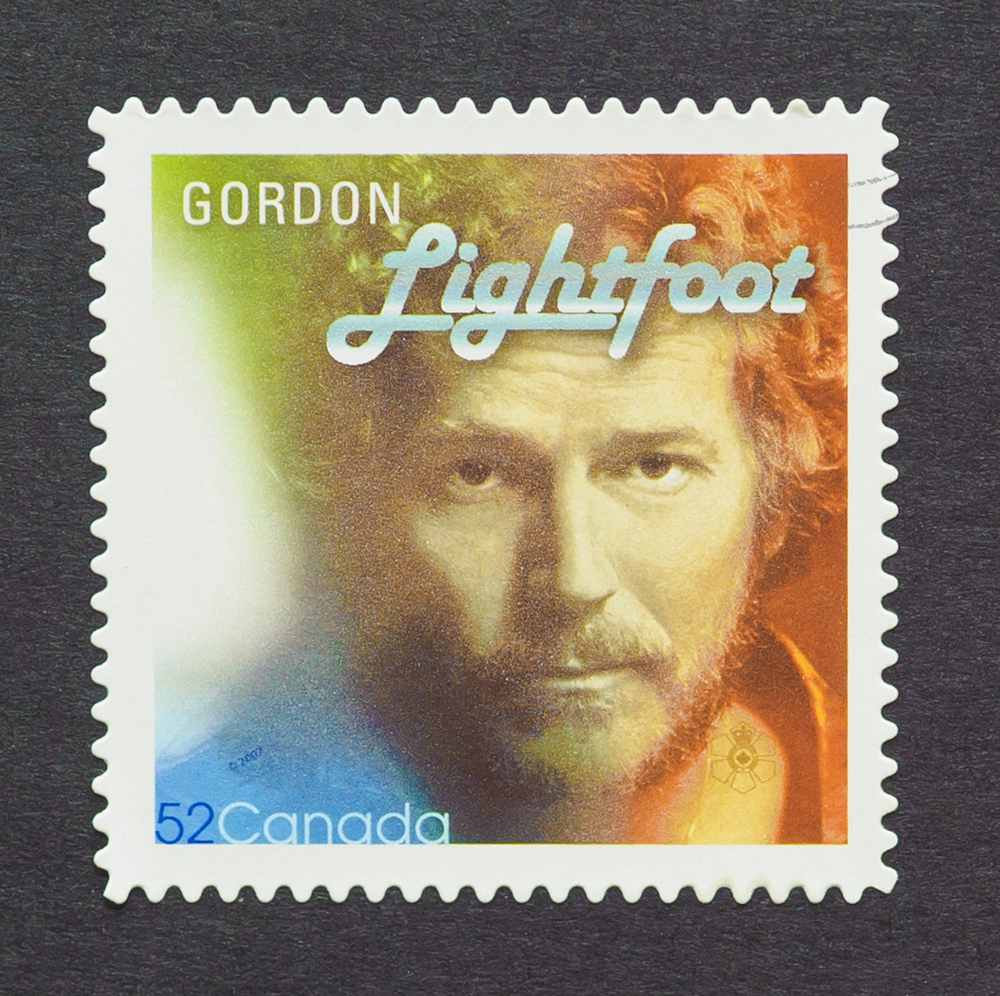
Did they really make a Canadian stamp imprinted with a portrait of GL as a young man?

Categories
artists Arts & Entertainment Music profiles

On The Road To Find Out

In this life, change is constant. This is not news to most of us. However, some things never change. A good example is the music of the artist profiled in this post. In 1977, after years of contemplation and a near-death experience with tuberculosis, Cat Stevens converted to Islam and radically changed his lifestyle. He is now known as Jusuf Islam, but the beauty and truth of his music haven’t changed. Jusuf’s songs have endured and are still relevant almost fifty years after they were released. His unique guitar style and vocalizations have remained bright, new, and refreshing through the intervening decades.

“On The Road To Find Out” is a song about a young man who sets out on a journey to clear his mind and see what he can discover. The song parallels Stevens’ life experiences. After a seven-month recovery from tuberculosis, Stevens felt a deep emptiness in his life and a yearning for something more. Out of these ashes, “On the Road to Find Out” was born. The lyrics are not about traveling in a physical sense. They are about Stevens discovering who he was and the purpose, if any, of his existence. Stevens achieved fame and fortune in 1967 at the age of only eighteen when his first three singles hit the charts in his native England. Like many of his recording artist peers, Stevens examined his noteworthy accomplishments and found they had not brought him the peace of mind or happiness he envisioned.

Many of Stevens’ songs reflect his quest for existential answers and a deep sense of fulfillment. I can only hope he found it.

Here’s my cover of this song’s rich lyrics and beautiful melody.

Categories
Arts & Entertainment life memories Music

Fill My Eyes

Cat Stevens rose to prominence as a folk and pop artist in the 1970’s. I’ve always enjoyed the thread of childlike innocence and spontaneity that runs through his music. After a near-death experience, Stevens began a serious search for a deeper meaning in life. In 1977, he left his rock and roll lifestyle and converted to Islam adopting the name Yusuf Islam.

Stevens released “In My Eyes” in April of 1970, years before his conversion. Like many of his songs, it is simple yet extremely poignant. It speaks of the impermanence of human love and of life itself. Paradoxically, “Fill My Eyes” flows like a sweet river and the meter is upbeat.

Here’s my cover of the song played in Yusuf/Stevens’ unique guitar style.

Categories
Arts & Entertainment Music

Songbird

Eva Cassidy is a perennial favorite of mine. When I saw a “Songbird” tutorial pop up on Jerry’s Guitar Bar, I couldn’t resist. Here’s my cover of Eva’s beautiful song.

Categories
artists Arts & Entertainment life Music

Phil Ochs: Changes

I always thought Phil Ochs was your basic regular-guy-folk-music icon until reading a few articles about the man. I’ve learned that Phil Ochs was anything but regular.

As a boy, Ochs enjoyed going to the movies. His favorite heroes were James Dean and John Wayne. Always a dreamer, Ochs fantasized about becoming a stoic cowboy like John Wayne, a teenage rebel like James Dean, or a rockabilly sex symbol like Elvis Presley. He took his early love of Hollywood to New York where he became one of the most celebrated folk singers in the world. He surfaced in Greenwich Village where he wrote songs so profusely that friendly rival Bob Dylan complained that he couldn’t keep up with him. At the same time, Ochs became a social activist leading protests against the Vietnam War with songs like “I Ain’t Marchin’ Anymore.”

Recognition came too late for Phil Ochs. He suffered from undiagnosed and untreated bipolar disorder. Ochs committed suicide in 1976 thinking himself a failure.

His song “Changes” is a soft philosophical ballad exploring the transient nature of human life. Everything changes, including our relationships, the seasons, our ages, and our circumstances. Through it all, Ochs believed we have an obligation to make a meaningful contribution to life. Ochs left behind his beautiful music and deeply held beliefs.

Here is my cover of “Changes.”

Categories
Arts & Entertainment Interviews Music reflections

Love Found And Lost

“Sky Blue and Black” by Jackson Browne is an emotional roller coaster, looking back on the joys and sorrows of love and its lasting impact. Browne wrote the song over a four-year period and released it on his album “I’m Alive” in 1992. The source material comes from Jackson’s relationship with a famous actress. However, Browne never wants his songs to be identified with his specific life events, so he rarely speaks about his real-life relationships, especially in context with his music.

“It’s a drag to even imagine that people are thinking about [the] relationship instead of their own lives,” Jackson told the Los Angeles Times. “I think if a song is any good, eventually it’ll turn out to be about the life of the listener and not about the life of the writer. Anyway, that’s my hope.”

Here’s my cover of “Sky Blue and Black”.

Categories
artists Arts & Entertainment Music

Why Marc Cohn Won a Golden Globe for Best New Artist

Is Marc Cohn a one-hit wonder? The answer, in a word, is “yes.” That being said, Walking in Memphis is a noteworthy accomplishment for a man who has spent most of his career steadfastly under the radar.

To his credit, Marc won a Golden Globe Award in 1991 for Best New Artist. Now, well into his fifties, Cohn is still touring with an ambitious schedule ahead in 2023.

Working on this song made me wonder: What made Elvis Presley so popular? In case you may be wondering too, here’s an article that helps to explain it.

Here’s my cover of “Walking in Memphis.”

Categories
acoustic guitar Arts & Entertainment Music Poetry

Jackson Browne: “My Opening Farewell”

Jackson Browne’s music is lyrical and penetrating. He is a poet as well as a prolific songwriter, musician, and vocalist. I became a long-time fan upon hearing his hit song, “These Days.” The song appears in the inspirational film “Invincible,” a story about an average guy who eventually realized his dream of playing in the NFL for the Philadelphia Eagles.

Most of Browne’s music is bitter-sweet. “My Opening Farewell” is a fine example. The melody, lyrics, and guitar technique are evocative. The song is played in an open D tuning which Browne uses brilliantly to paint pictures, emotions, and moods. I feel it is sad/beautiful, like the woman described in the song. It’s about one of Browne’s early love relationships that lasted a few years.

In an interview, Browne had this to say about the relationship and the meaning of My Opening Farewell:

“Elektra [Records] had this recording ranch up in northern California and we stayed at this hotel. And a train ran by it. So: ‘there’s a train every day, leaving either way,’ and the whole idea [being] that you could go one way or the other. And this relationship was struggling. The song is about the particular moment when you recognize that the person you love wants to be anywhere else. Wants to be gone; wants to move on.”

Here’s my cover.

Played with Martin D-35 Guitar

Played with Martin D-45 Guitar

*Both tracks have minor flubs. Can’t get through this piece without them.

Categories
Arts & Entertainment folk music Music

Early Lightfoot Love

Photo by Vadim Boichenko

“Song for a Winter’s Night” is one of Gordon Lightfoot’s earliest love songs. It is also one of his biggest hits.

As folk music became commercially viable in the late sixties, clubs blossomed featuring promising folk musicians. Gordon Lightfoot landed a job in one of them in downtown Toronto. He stood apart from the crowd because he performed many of his own songs in a characteristically pure voice. After he developed a following, a club owner invited Lightfoot to perform at his club across the street at twice the salary. Lightfoot gratefully accepted the invitation to perform at the Riverboat, Toronto’s premier folk music club.

With his beautiful voice and prolific outpouring of quality music, it was only a matter of time before Warner/Reprise records rewarded Lightfoot with a one million dollar recording contract, an unheard-of number for a Canadian singer.

Lightfoot recorded “Song for a Winter’s Night in 1967 on his album, “The Way I feel.” Many recording artists covered it, including Sarah McLachlan in the soundtrack for the film “Miracle on 34th Street.”

Gordon wrote the song on a hot summer night while performing in Cleveland. He missed his wife at the time, Brita Ingegerd Olaisson, and his thoughts turned to winter. Here’s my cover.