“Starry, starry night/ Paint your palette blue and grey/ Look out on a summer’s day/ With eyes that know the darkness in my soul.”
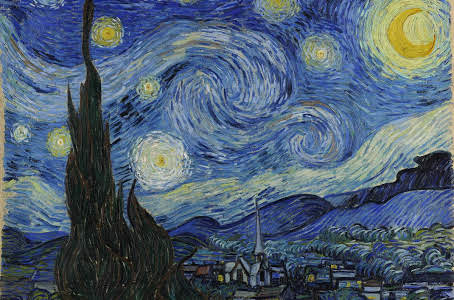
Those words came to Don McLean as he looked at Vincent Van Gogh’s 1889 painting “The Starry Night.” Soon, he had a masterpiece of his own: “Vincent,” a 1972 hit that he released right on the heels of his defining epic “American Pie.”
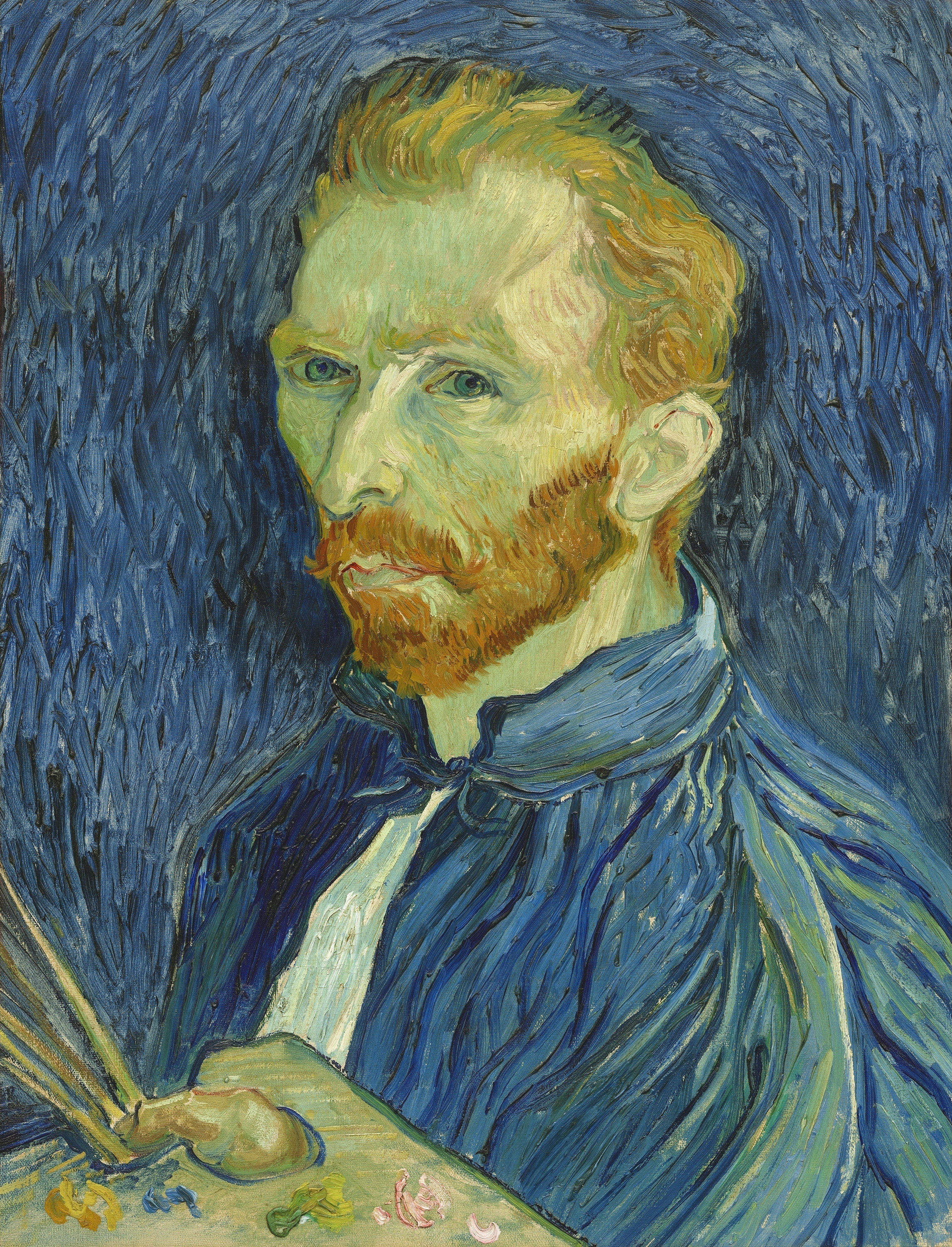
Like Van Gogh’s painting, Mclean’s “Vincent” has touched a wide range of creative spirits over the last 50 years. The song, the painting, and the book “Dear Theo,” written by Van Gogh’s brother, have certainly touched my heart again and again. I’ve always thought that Vincent’s style was at least in part inspired by his mental illness. To me, the brush strokes reflect an altered state of perception similar to the hallucinogenic patterns seen under the influence of Mescaline or LSD.
Van Gogh labored in obscurity until his self-inflicted death at the age of thirty-seven. He sold only a few of his paintings during his lifetime. Today, Van Gogh is a household word, and his paintings each sell for fifty million dollars or more. “The Starry Night” is one of Van Gogh’s most famous paintings.
Here’s my interpretation of Mclean’s homage to the masterpiece.
These days are unbelievable. And horrific. And wonderful.
Let’s forget about current events for a few moments. Let’s listen, instead, to some music by a singer/songwriter I admire.
“These Days” is a song by Jackson Browne. He wrote it when he was sixteen. He still performs it today many years later. Brown’s music is lyrical. He is a consummate guitarist and performer.
Please enjoy my version of this hauntingly beautiful song. Focus on the music. Ignore my facial expressions. The old bones are losing the war on multiple fronts. I’m playing this 75% the way JB does.
Kate Wolf came to prominence during a ten year period from 1975 to 1985. Tragically, Leukemia brought Kate’s life and singer/songwriting career to a premature end at the age of forty-four. In the brief time she had, Kate managed, in her gentle way, to become a major influence on the folk scene with songs like, “Give Yourself to Love,” “Across the Great Divide,” “Green Eyes,” “September Song,” and many more. In all, she wrote over two hundred songs, a prodigious output considering Kate’s foreshortened career.
The appeal of Wolf’s music is the same today as it was when she released her first album on her Owl Records label more than 30 years ago. Millions of fans around the world remain loyal to Kate and her music. She continues to attract new fans, like me, with her abundant legacy.
I want to thank Gena Netten for introducing me to “Give Yourself to Love” and the incredibly beautiful music of Kate Wolf.
Like the title of the song “Back On The Street Again,” we are all, in a sense, starting over thanks to the CV pandemic. It has caused untold suffering for millions of people around the world. And yet, in the midst of this dark night of the soul, it is becoming obvious that we will emerge, like a new-born butterfly, into the sunlight. We will resurface in these baptismal waters with more compassion, new skills, and better ways of doing things large and small.
“Back On the Street Again” originated on an album simply titled “Steve Gillette.” Released in 1968 by Vanguard Records, Gillette’s debut album became an immediate success. Many of his songs have since been recorded by other well-known folk music artists. “Back On the Street Again” and “Darcy Farrow” are two of Steve’s most popular songs. I’m also a big fan of two other songs on the album: “A Number And A Name” and “The Bells In The Evening.”
Enough said. Here’s my cover of “Back On The Street Again.”
I’m a huge Jackson Browne fan. Here’s my version of one of his classic songs, “Enough of the Night.” In addition to his musical artistry, Browne is an extraordinary poet.
I’ve posted my rendition of another Jackson Browne tune on my other blog: www.davidgittlin.net It’s the title song from his 1993 album “I’m Alive.”
And, last but not least; the song is relevant to current events. We’ve had enough of the night. Elect Joe Biden.
girl plays an acoustic guitar. close-up of strings
Who is Kate Wolf? If you’re like most people, you probably have no idea. I’m a huge folk music fan, and I’d never heard of Kate until last year, but I’m happy to have discovered her. Better late than never. Her music pierces my heart, and the simple beauty of her voice, melodies, and guitar-playing transport me to transcendent realms.
There’s a story that a fan at a live concert once complimented Kate on her earrings. Without hesitation, she removed the earrings and handed them to the fan. I believe the beauty of Kate’s music emanated from the beautiful being that she surely was.
Kate Wolf came to prominence during a ten year period from 1975 to 1985. Tragically, Leukemia brought Kate’s life and singer/songwriting career to a premature end at the age of forty-four. Despite her foreshortened life span, Kate managed, in her gentle way, to become a major influence on the folk scene with songs like, “Give Yourself to Love,” “Across the Great Divide,” “Green Eyes,” “September Song,” and many more. In all, she produced seven albums including a “live” in-concert album recorded at a music festival in Mendocino, California.
The appeal of Wolf’s music is the same today as it was when she released her first album on her Owl Records label more than 30 years ago. Her music is plainspoken with powerful natural imagery woven into poignant portrayals of the longings, joys, and sorrows of the heart that transcend romantic stereotypes.
Singing in a plain, pure voice, Wolf never indulged in vocal ornamentation for the sake of effect, and she avoided saccharine sentimentality with her natural sweetness.
As an acoustic guitar-based folk artist, she distinguished herself from such forebears as Bob Dylan, Joni Mitchell and James Taylor, and from her more self-consciously naturalist and mystical contemporaries in “women’s music.”
Now, when cynicism and irony seem to be second nature to pop music, Wolf’s directness rings truer than ever.
“Kate was unique,” says Berkeley-based guitarist Nina Gerber, who was inspired to become a professional musician after seeing Wolf perform in a pizza parlor in Sevastopol, a small town north of San Francisco. Gerber became Wolf’s key accompanist from 1978 to 1986. Gerber produced the memorial album, Treasures Left Behind, and she has helped organize and produce all four Kate Wolf Memorial Music Festivals.
“She had her own style,” Gerber says. “There was nobody to compare her to. Nowadays, you listen to somebody and they either sound like Shawn [Colvin] or Nanci [Griffith] or Emmylou [Harris] or whomever.
“Kate really took on the environment she was in, so when she wrote about it, it wasn’t contrived. She didn’t go out of her way to try to be flowery and poetic. She pretty much said things the way they were.”
Yet, while Wolf’s songs seem inimitably personal when she sings them, they lend themselves surprisingly well to interpretation. As a prime example, Nanci Griffith, an unpretentious young woman who once described her music as “rockabilly” and eventually gained an international audience, lends a soul-searing depth and beauty to her interpretations of wolf’s songs.
When Wolf sang of a woman who “rises like the dolphin,” or an “owl calling softly as the night was falling,” it felt true. She brought the listener into her unpretentious realm while prodding him or her to see the natural world anew — always with love as the bottom line.
Wolf, born Kathryn Louise Allen in San Francisco on January 27, 1942, cultivated her approach after moving to Sonoma County in the early 1970’s. She sang songs like “Across The Great Divide,” “Safe At Anchor,” “The Wind Blows Wild,” “Poet’s Heart” and “Give Yourself To Love” in a pure voice, as unaffected, comforting and honest as you want to hear from your lover in the middle of the night. At the height of her popularity, Kate appeared at TheAustin City Limits Music Festivaland Garrison Keillor’s A Prairie Home Companion.
“I live for a sense of a feeling of purposefulness in this world, you know, that I could stop my life at any point and feel that my life has been worthwhile; that the people I’ve loved and my children have all reached a point where their lives are now going to come to fruit. And as far as something I live by, it’s to try to be as alive as possible and feel free to make my mistakes and try to be as honest as I can with myself.”
Nanci Griffith was a popular singer/songwriter who came to prominence in the 1980s. I bought one of her albums recorded in 1988 and then tracked back to discover more and more of her music. She wrote and performed her first song at the age of twelve.
Griffith was the daughter of musical parents, and she spent her childhood involved with theater and literature as well as music. She began playing clubs around Austin at the tender age of 14 and continued to perform during her college years at the University of Texas, as well as during her stint as a kindergarten teacher in the mid-’70s. Nanci finally decided to make music her full-time ambition in 1977.
One observer said of Nanci, “She found it easier to deal with the cowboys in bars at night than she did with her kindergarten students during the day.”
Nanci Griffith’s world tours are now the stuff of memories and YouTube videos, but her heart and soul will endure for years to come. She recorded and released more than twenty albums during her brilliant career. The video above features me playing one of Nanci’s rousing songs titled “Say It Isn’t So.”
David Gittlin has written three feature-length screenplays, produced two short films, and published three novels. Before quitting his day job, he spent more than thirty years as a marketing director, building expertise in advertising, copywriting, corporate communications, collateral sales materials, website content/design, and online marketing. He plays guitar as a hobby.
Who is Kate Wolf? If you’re like most people, you probably have no idea. I’m a huge folk music fan, and I’d never heard of Kate until last year, but I’m happy to have discovered her. Better late than never. Her music pierces my heart, and the simple beauty of her voice, melodies, and guitar-playing transport me to transcendent realms.
There’s a story that a fan at a live concert once complimented Kate on her earrings. Without hesitation, she removed the earrings and handed them to the fan. I believe the beauty of Kate’s music emanated from the beautiful being that she surely was.
Kate Wolf came to prominence during a ten year period from 1975 to 1985. Tragically, Leukemia brought Kate’s life and singer/songwriting career to a premature end at the age of forty-four. Despite her foreshortened life span, Kate managed, in her gentle way, to become a major influence on the folk scene with songs like, “Give Yourself to Love,” “Across the Great Divide,” “Green Eyes,” “September Song,” and many more. In all, she produced seven albums including a “live” in-concert album recorded at a music festival in Mendocino, California.
The appeal of Wolf’s music is the same today as it was when she released her first album on her Owl Records label more than 30 years ago. Her music is plainspoken with powerful natural imagery woven into poignant portrayals of the longings, joys, and sorrows of the heart that transcend romantic stereotypes.
Singing in a plain, pure voice, Wolf never indulged in vocal ornamentation for the sake of effect, and she avoided saccharine sentimentality with her natural sweetness.
As an acoustic guitar-based folk artist, she distinguished herself from such forebears as Bob Dylan, Joni Mitchell and James Taylor, and from her more self-consciously naturalist and mystical contemporaries in “women’s music.”
Now, when cynicism and irony seem to be second nature to pop music, Wolf’s directness rings truer than ever.
“Kate was unique,” says Berkeley-based guitarist Nina Gerber, who was inspired to become a professional musician after seeing Wolf perform in a pizza parlor in Sevastopol, a small town north of San Francisco. Gerber became Wolf’s key accompanist from 1978 to 1986. Gerber produced the memorial album, Treasures Left Behind, and she has helped organize and produce all four Kate Wolf Memorial Music Festivals.
“She had her own style,” Gerber says. “There was nobody to compare her to. Nowadays, you listen to somebody and they either sound like Shawn [Colvin] or Nanci [Griffith] or Emmylou [Harris] or whomever.
“Kate really took on the environment she was in, so when she wrote about it, it wasn’t contrived. She didn’t go out of her way to try to be flowery and poetic. She pretty much said things the way they were.”
Yet, while Wolf’s songs seem inimitably personal when she sings them, they lend themselves surprisingly well to interpretation. As a prime example, Nanci Griffith, an unpretentious young woman who once described her music as “rockabilly” and eventually gained an international audience, lends a soul-searing depth and beauty to her interpretations of wolf’s songs.
When Wolf sang of a woman who “rises like the dolphin,” or an “owl calling softly as the night was falling,” it felt true. She brought the listener into her unpretentious realm while prodding him or her to see the natural world anew — always with love as the bottom line.
Wolf, born Kathryn Louise Allen in San Francisco on January 27, 1942, cultivated her approach after moving to Sonoma County in the early 1970’s. She sang songs like “Across The Great Divide,” “Safe At Anchor,” “The Wind Blows Wild,” “Poet’s Heart” and “Give Yourself To Love” in a pure voice, as unaffected, comforting and honest as you want to hear from your lover in the middle of the night. At the height of her popularity, Kate appeared at TheAustin City Limits Music Festivaland Garrison Keillor’s A Prairie Home Companion.
“I live for a sense of a feeling of purposefulness in this world, you know, that I could stop my life at any point and feel that my life has been worthwhile; that the people I’ve loved and my children have all reached a point where their lives are now going to come to fruit. And as far as something I live by, it’s to try to be as alive as possible and feel free to make my mistakes and try to be as honest as I can with myself.”