Categories
Acoustic Guitar Performances artist profiles Arts & Entertainment Folk Guitar folk music Folk Song Covers relationships Song Facts songwriting

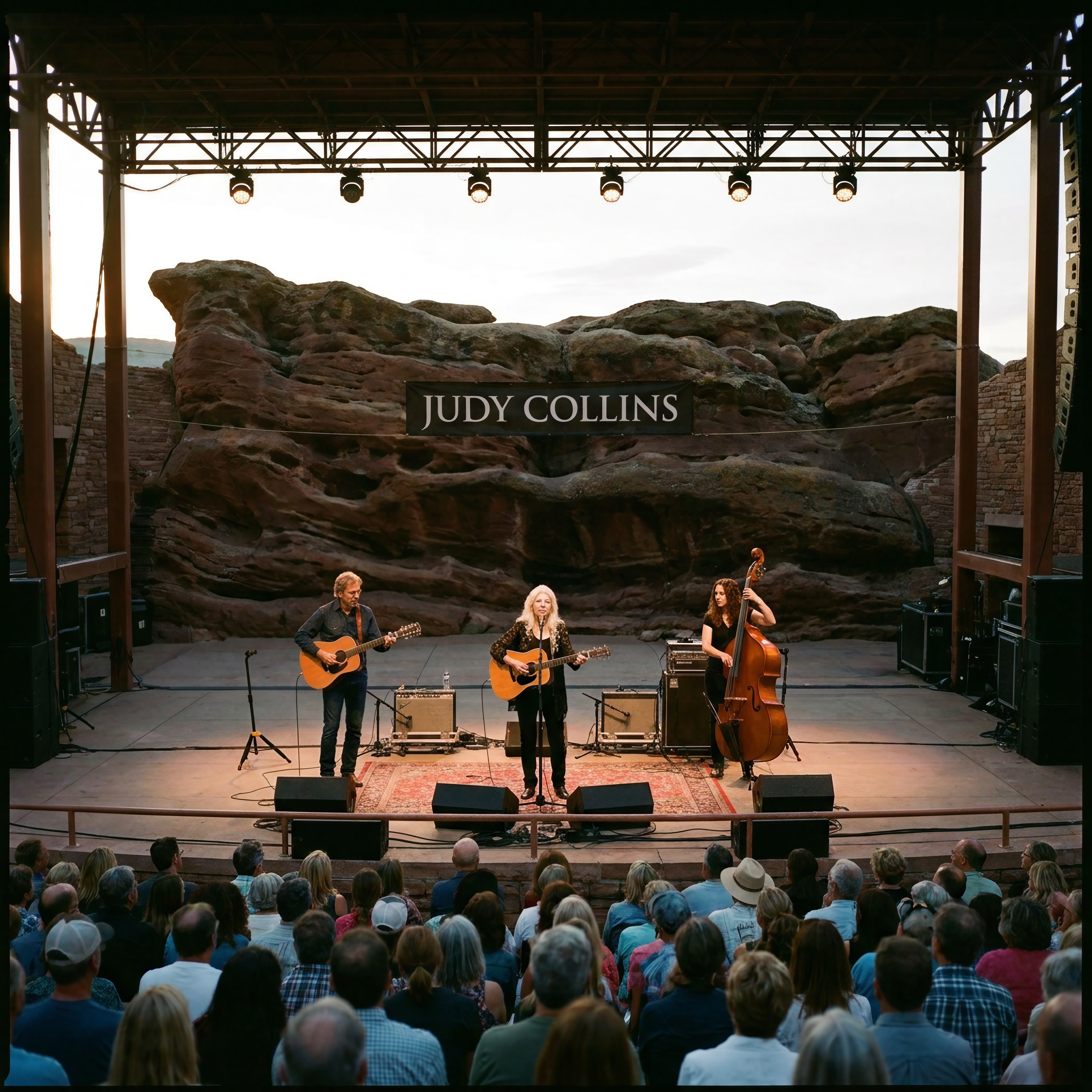
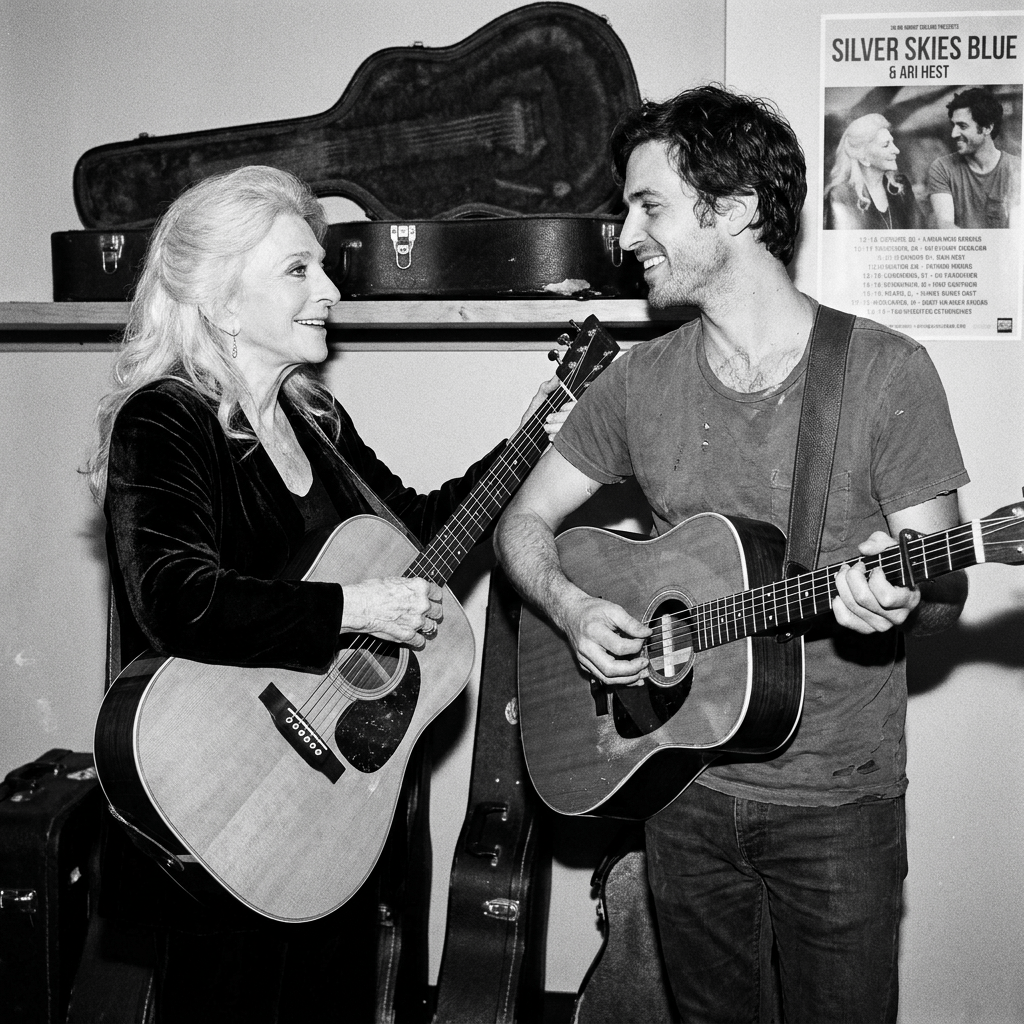
“Silver Skies Blue” Inspired by Judy Collins and Ari Hest

I recently changed my music source from Sirius XM to Pandora. As an avid fan of Folk and Country Music, it turned out to be a wise decision. Now, I can listen to my favorite recording artists singing songs from the 60s through the 90s. And lately, several of those songs are appearing on this blog.

Like the previous song I posted here, “Silver Skies Blue” captured my attention almost immediately. I had never heard it before because, prior to Pandora, I had never listened to Judy Collins’ music the way I do now. In addition to Silver Skies Blue, I’ve posted several of Judy’s cover and original songs, including: When I Was a Girl in Colorado, Suzanne, and Hey, That’s No Way to Say Goodbye.

The album “Silver Skies Blue” features songs by Collins and Ari Hest, who also performs with his polished guitar playing and powerful, deep voice that complements Judy’s higher one perfectly. Released in 2016, the album earned Collins her first Grammy nomination in 40 years.

Solo Version

Categories
acoustic guitar Acoustic Guitar Performances artist profiles Arts & Entertainment Folk Guitar Folk Song Covers Music Song Facts songwriting

Townes Van Zandt’s Pancho and Lefty

Townes Van Zandt’s life touched mine only tangentially until recently. I first heard of Van Zandt through Nanci Griffith’s cover of his song “Tecumseh Valley.” Like many Van Zandt ballads, it tells a tragic and beautifully melodic story about a woman named Caroline. “Techumseh Valley” is about a life, a time, and a place far from the life I’ve led. Yet, it’s a song I’ll never forget. Although Van Zandt never became a big name in the music world during his career, it is because of the depth, emotion, and poignancy of songs like “Tecumseh Valley” that the singer and songwriter is remembered and celebrated today, almost thirty years after his death.

There are two more Van Zandt songs that have really touched me. They are “If I Needed You” and “Pancho and Lefty.” I’m covering “Pancho and Lefty” here. “If I Needed You” will arrive in the near future.

Thanks for listening.

ENHANCED VERSION

SOLO VERSION

Categories
acoustic guitar Acoustic Guitar Performances artist profiles Arts & Entertainment Folk Song Covers inspiration life love Making Changes Music relationships Song Facts songwriting

Breaking Up With Kindness

The ending of a love relationship is often painful and dramatic. In “Hey, That’s No Way to Say Goodbye,” Leonard Cohen has penned a poetic plea for a graceful, respectful breakup that honors the beauty of a dying connection, rather than dwelling on the pain, anger, and lingering regret of the ending.

Cohen wrote the song in 1966 on a decrepit bed in the Penn Terminal Hotel in Midtown Manhattan. In 1967, Judy Collins, who became Cohen’s good friend, recorded the song for her album  Wildflowers. The following month, Cohen’s own version was released on his debut album, Songs of Leonard Cohen.

Cohen described the song as “a moment of clarity in the middle of a love affair’s end.” He also explained, “It’s about acknowledging that love changes but doesn’t truly die. The bodies may part, but the connection remains in the light and the words left behind.”

While introducing “Hey, That’s No Way to Say Goodbye” during his 1976 Live at Montreux performance, Cohen memorably said: “As you eastern metaphysicians know, just as from the darkest mud blooms the whitest lotus, so from the brownest hotel room you occasionally get a good song.”

Playing heartfelt, beautiful songs like this one juices me up. Enjoy these cover versions.

Solo Version

Enhanced Version

Categories
artist profiles Arts & Entertainment Folk Guitar Folk Song Covers songwriting

Cat Stevens and Alun Davies: A Musical Journey

In this song, Cat Stevens is singing to a woman he yearns for in a Human form. On another level, he may be singing, aware or unaware, to the Divine Feminine. In either case, the object of Stevens’ love is unattainable in the present. Yet, I believe, the admirer (Stevens) continues to yearn for his beloved in the hope that he will, one day, meet his perfect love, in either or both Human and Divine forms.

There are many interpretations of “How Can I Tell You.” In my view, the song is hopeful rather than despairing. However one interprets “How Can I Tell you,” I feel the song is filled with incredible beauty that cannot help but shine through.

Stevens first met Alun Davies as a backup musician in a recording session. He liked what he heard. After another session, Stevens recognized that Davies was an exceptional talent. In a following private session, Stevens played something like fifty of his original songs for Davies, whereupon Davies decided Cat was also an exceptional talent. He agreed to accompany Stevens on an upcoming tour. After the tour, Davies became Stevens’ permanent 2nd guitar until Stevens stopped playing music with his conversion to Islam in 1977. When Stevens began performing again in 2003, the two artists reunited.

Here is a new version of “How Can I Tell You” with me playing and singing Davies’ now famous second guitar part.

Solo Version

Categories
acoustic guitar artist profiles Arts & Entertainment Folk Guitar Folk Song Covers songwriting

Steve Gillette: Influential Folk Artist and Songwriter

Have you heard of Steve Gillette? If you were alive in the 1960s and liked folk music, there’s a chance the name rings a bell. Gillette never reached the top of the charts, but he’s a very talented singer/songwriter. Many of his songs have been performed by artists you have heard ofincluding John Denver, Gordon Lightfoot, Ian and Sylvia, Nanci Griffith, and Linda Ronstadt.

“The Bells in the Evening” appears on Gillette’s debut album, released in 1967. The album, simply titled “Steve Gillette,” stands as one of Steve’s finest recordings. “The Bells” is a bittersweet (actually sweet-bitter) song of love blossoming in the spring and fading away in the fall. I find the melody and lyrics deeply moving. Perhaps you will, too. The song is also replete with imagery. When you listen, what images come to your mind?

I’ve revisited “The Bells of the Evening,” adding a new background track by Giovanni Egusquista. Here’s my cover.

“Bells In The Evening” With Backup Instrumentation

“Bells In The Evening” Solo

Categories
Arts & Entertainment children climate crisis environment Folk Song Covers Music songwriting

Environmental Concerns In The Song ‘Where Do the Children Play?’

Many of Yusuf/Cat Stevens’ songs convey underlying messages about childhood and the relationships between children and adults, such as ‘Father & Son’ and ‘Oh Very Young,’ to name a few. “Where Do the Children Play?” is no exception. It becomes increasingly timely with each passing day, given the environmental crisis we are facing.

The song refers to the destruction of natural spaces caused by overdevelopment and industrialization. It asks a fundamental question: What future awaits our children when the spaces where they play are increasingly paved over and polluted? 

“Where Do The Children Play” prompts us to consider the inherent features of the ‘progress’ we are making, as well as Humanity’s impact on planet Earth. Essentially, this beautiful and simple song begs for a balanced relationship between Human Beings and nature.

Typical of a Cat Stevens song, the rhythm is quite unique. Here’s my cover.
 

Categories
Arts & Entertainment Folk Guitar folk music Folk Song Covers songwriting

Exploring Life’s Meaning in Cat Stevens’ Lyrics

Far from old age, Cat Stevens wrote “Oh Very Young” when he was twenty-five. The wisdom in the song surpasses Stevens’ chronology with lines like, “You’re only dancin’ on this Earth for a short while.” Stevens contracted tuberculosis when he was nineteen, and it almost killed him. After that experience, Stevens kept an eye on the Big Picture.

Always the explorer, Stevens sought the meaning and purpose of life, as illustrated in his songs like “On the Road to Find Out.” He eventually converted to Islam in 1977. Around the same time, he permanently left the world stage as a singer and songwriter. In his relatively short career, Cat Stevens left us with a body of music that is still relevant today and, to millions around the world, extremely enjoyable.

Originally, I played this song using a picking method, and then I switched to strumming. I watched a video of Stevens performing the song with a strumming method. I thought, I’ll never be able to play it that fast. To my amazement, I wound up playing the song as fast as Stevens when I strummed it. Interesting. Here’s my cover.

In case you’re interested, here’s the finger-picked version.

Categories
acoustic guitar artist profiles Arts & Entertainment Folk Guitar folk music Folk Song Covers Music

An Insight Into Jackson Brown’s Unique Music

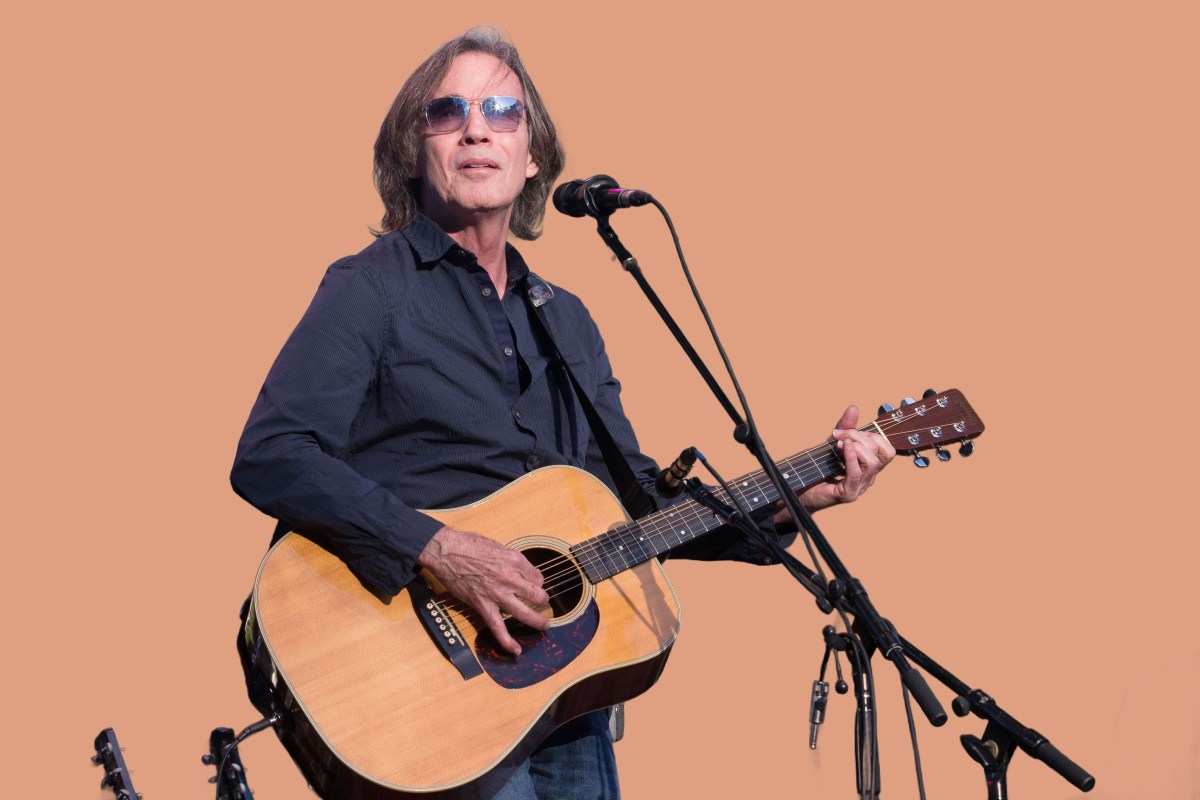
Jackson Browne’s guitar techniques, lyrics, and melodies stand apart from the crowd. What he says through his music is sometimes searing, sad, and occasionally, happy. However, all of Browne’s songs have something in common: an incredible sensitivity and beauty.

Browne wrote “These Days” when he was only sixteen years old. Despite his youth, Browne demonstrated a keen sense of heartbreak. I’m not sure how a sixteen-year-old could feel the depth of emotion and remorse expressed in this song. If we assume Jackson experienced and gave voice to the words and tone of “These Days,” then he was wise beyond his years and deeply rooted in himself from early on.

The song had its first release when a protégé of Andy Warhol named Nico picked it up on her “Chelsea Girl” album. Brown played acoustic guitar in the background. “These Days” gained wider recognition when several artists subsequently covered it.

Brown eventually released his version of the song in 1973 on the album “For Everyman.” He rewrote “These Days” to make it more optimistic. In his own words, Jackson remembers, “Over the rest of my teenage years and into my 20s, I developed a kind of optimism, a kind of resoluteness, so I changed [one verse] to: ‘I’ll keep on moving, keep improving.’ That’s more to me what life is made of, the idea that I’ll get through this, I’ll continue looking.”

I’ve always wanted to play this song the way Jackson Browne does. Thanks to my friend Jerry Lambert, I can now do it. Here’s my cover.

Categories
acoustic guitar Arts & Entertainment Folk Song Covers inspiration profiles

The Magic of Moonshadow: Embracing Life’s Moments

In a 2009 interview, Cat Stevens (by then Yusuf Islam) is quoted as saying: “I was on holiday in Spain. I was a kid from the West End [of London]- bright lights, etc. I never got to see the moon on its own. In the dark, there were always streetlamps. So there I was on the edge of the water on a beautiful night with the moon glowing, and suddenly I looked down and saw my shadow. I thought that was so cool; I’d never seen it before.”

The song is about finding hope in any situation, of being present and joyful. With the simplicity and joy of a child, Stevens writes about seeing life as it is in the moment and not comparing it to others’ lives or other times in an individual’s life.

Moonshaw is a beautiful song expressing the idea that every moment in life is rich and unique. Whether we are aware of it or not, Stevens is saying, we are always “leaping and hopping on a Moonshadow” every second of our existence. He cautions against being too wrapped up in our worries and concerns about what could be or what has been, and consequently missing the richness of life as it is.

Here’s my cover played in the artist’s style.

Categories
artists Arts & Entertainment Folk Guitar folk music Folk Song Covers

Tom Paxton: An Emergent Folk Music Icon

Tom Paxton released “The Last Thing On My Mind” in 1964 on his album, Ramblin’ Boy.” The inspiration for the song came from Dave Van Ronk and Bob Dylan’s versions of “He Was A Friend of Mine.” This lost love ballad became one of Paxton’s biggest hits. He is also known for his protest songs against the Vietnam War and other social injustices. (What Did You Learn In School Today?)

“The Last Thing On My Mind” was one of the first songs I learned some forty years ago when I started playing the guitar. This is the first time I’ve released my cover publicly. The themes of the song include friendship, loss, and the passage of time.

Here’s my cover.