Categories
artificial intelligence Arts and Entertainment AudiBooks Best AudioBooks Best eBooks Best Selling Science Fiction humor Nearly Human Androids space travel

Coming Soon: “Return of the Visitor”

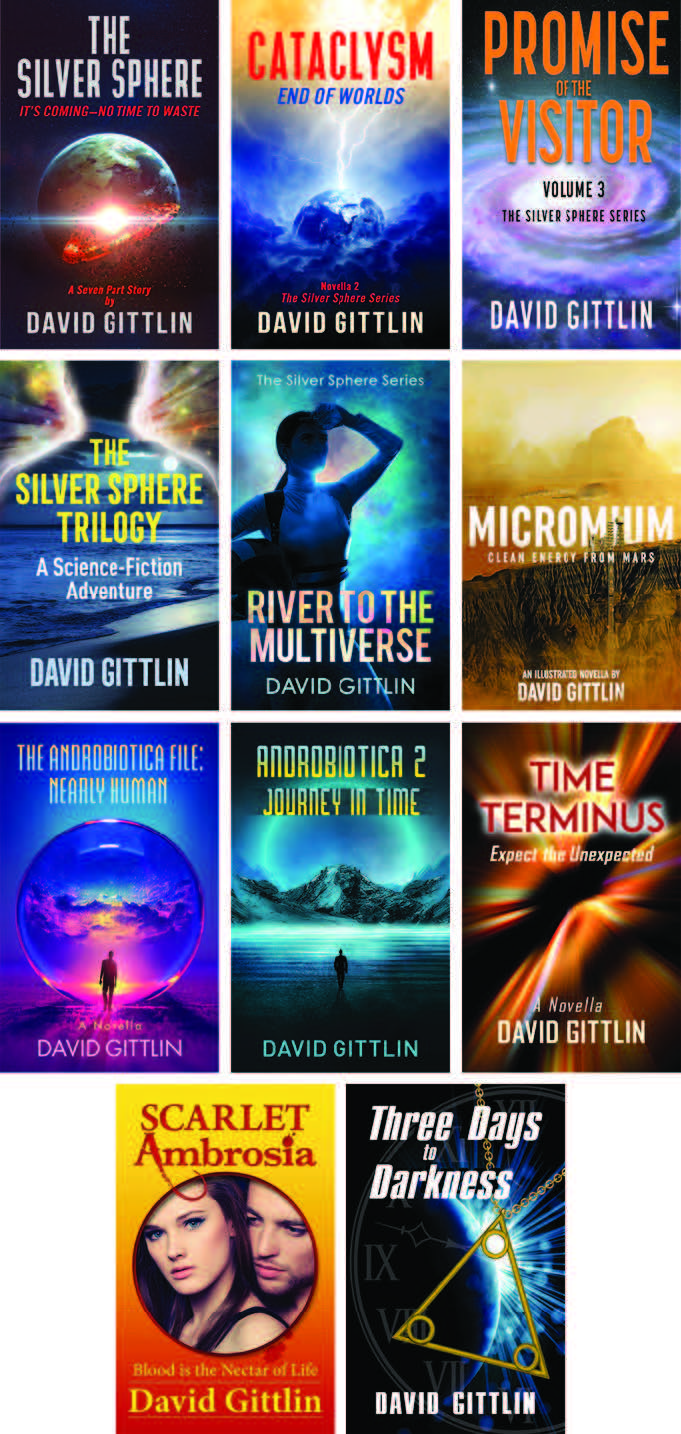
The Silver Sphere Series

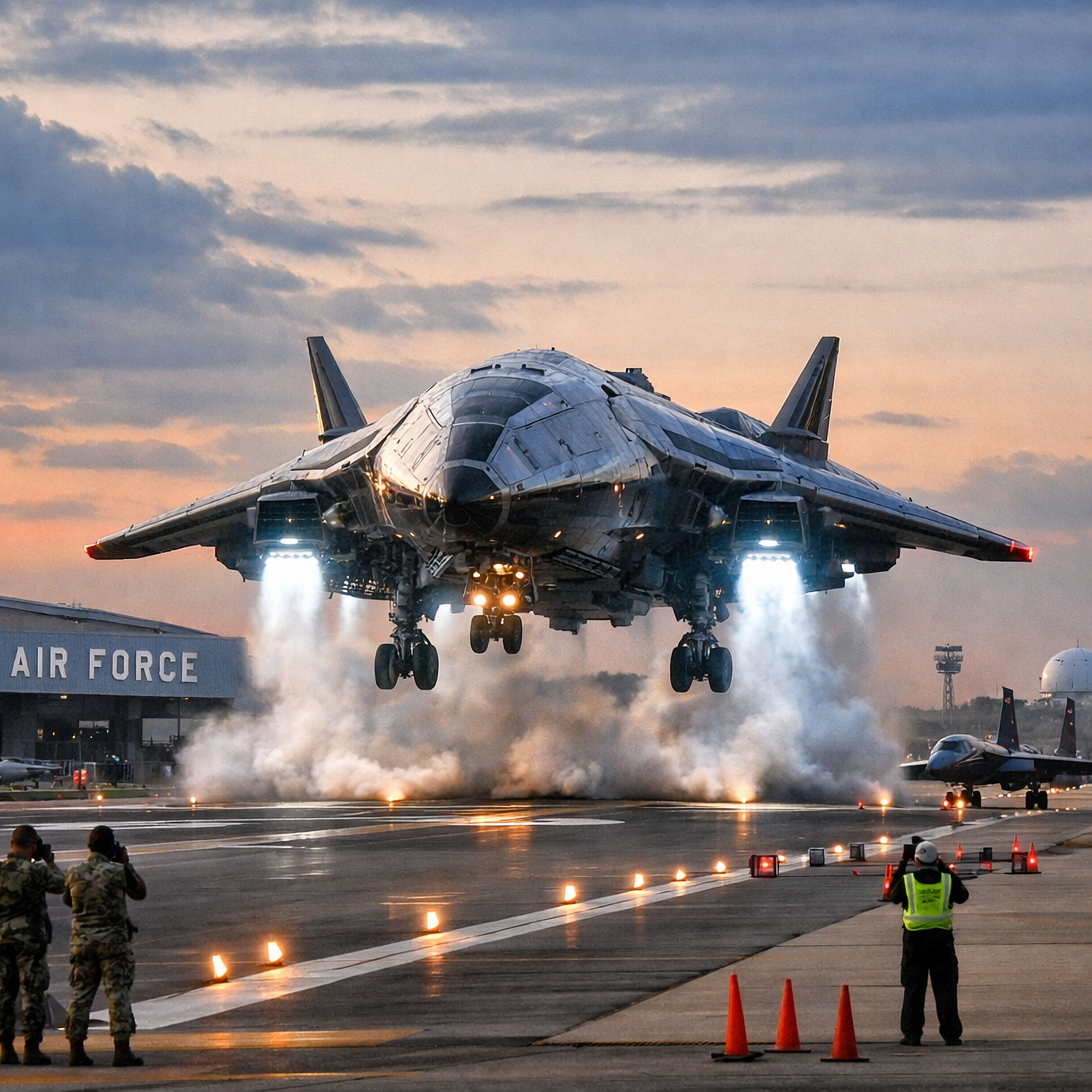
Silenna, the Scientist/Warrior from the planet Aneleya, returns to Earth to begin her long-awaited Humanitarian work. From the start, her promise to the people of Earth gets off on the wrong foot when Air Force fighter jets come within a hair’s breadth of blowing the Dauntless 2 and its crew out of the sky. After an uneasy landing at an Air Force base in Washington, D.C., Silenna and her friends, Amy and Jacob Cassel, and Arcon, an Aneleyan superintelligent AI contained in a silver sphere, decide to focus first on saving the lives of terminally ill patients. They are joined in this effort by Lenora, a lifelike Android created by scientists on the survivor colony, New Aneleya.

Before this healing initiative even gets off the ground, the President of the United States, Trevor Aston III, wants to meet Silenna and her companions. Because the President feels the world is already teetering on a delicate balance of power, he believes the timing isn’t right to introduce a seven-foot Alien woman with an agenda into world politics. He intends to politely and diplomatically send Silenna back to where she came from.

Meeting an oppositional U.S. President in a retrofitted Sikorsky helicopter on the outskirts of a New Jersey airfield is only the first of many obstacles Silenna and her friends will have to face. Someone or something is stalking them. The perpetrator is either the smartest and most elusive assassin the world has ever known, or a deadly group of terrorists. Danger lurks at every turn, and the authorities are baffled.

“Return of the Visitor” will surprise you, entertain you, and open your heart in ways that you never imagined. Although it is the sixth volume of the Silver Sphere Series, the novella can be enjoyed as a standalone story.

Categories
Arts & Entertainment eBooks Novels Science Fiction

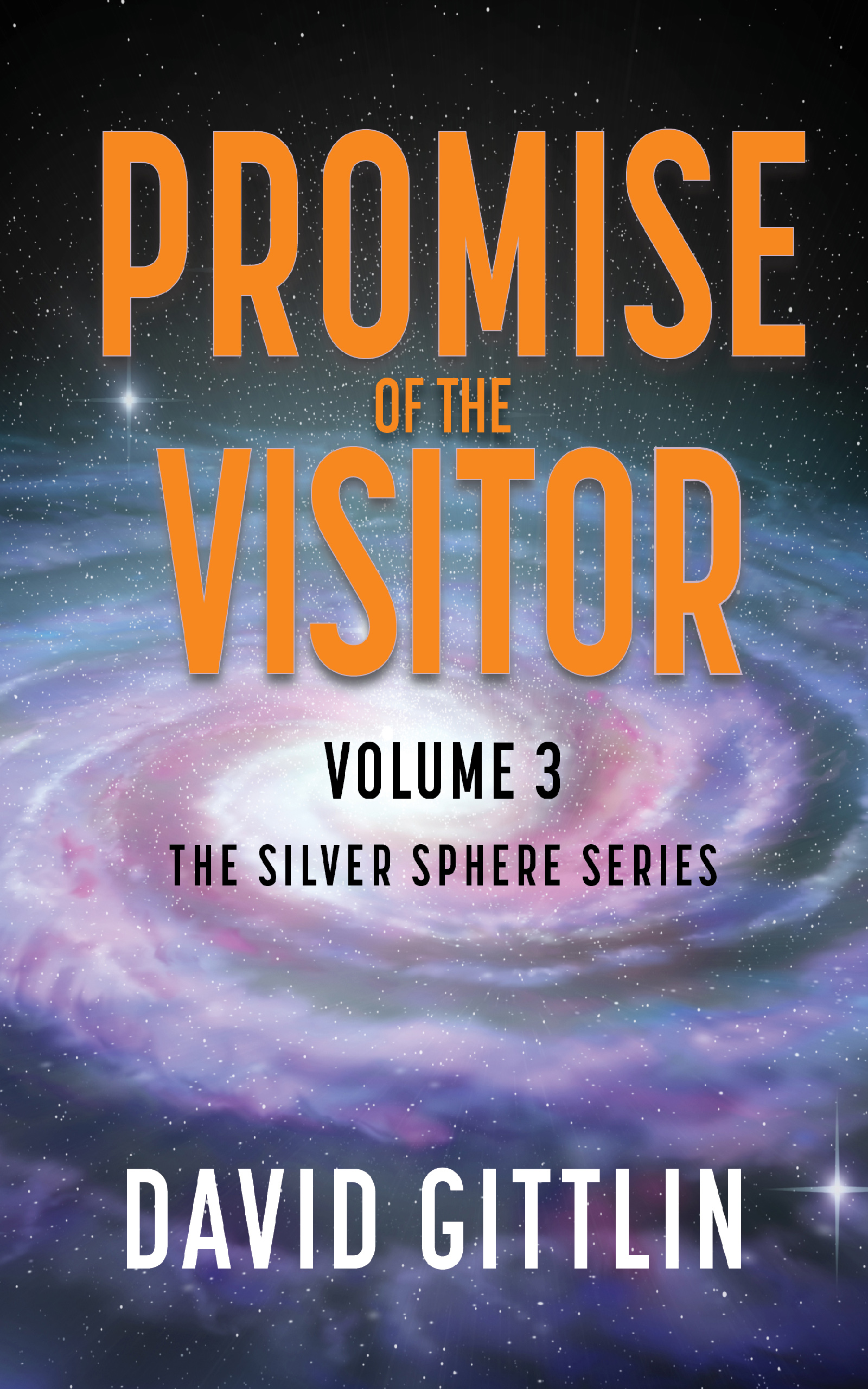
Promise of the Visitor

The Explosive Conclusion to the Silver Sphere Series

Volume 3 Coming Early April

On Amazon Worldwide

An unconscious body lies on the kitchen floor. Two Daytona Police deputies are knocking on the front door of the beach house mystery writer Jacob Cassel rents. It’s going to be an interesting morning for Jacob, his super-smart girlfriend, Amy, and Arcon, an AI from the other side of the Milky Way. If they can survive the morning without being thrown in jail, they are expecting a visitor to arrive from the planet Aneleya later in the evening bearing a cornucopia of gifts for the human race. Instead of gifts, the visitor arrives with dire news about a doomsday device threatening the destruction of planet Earth and the entire solar system.

Welcome Aboard for the Suspenseful Journey

Categories
Arts & Entertainment eBooks humor Novels

It’s Here!

Now Available on Amazon Worldwide

When Jacob Cassel and his telepathic AI companion discover a dead body on a lonely Florida beach, it is only the beginning of an adventure that holds the fate of our world and the destiny of other worlds in the balance.

Each book in The Silver Sphere series is “free-standing.” You can read these books in any order. The author provides enough background information in each novella to orient readers to the characters and other relevant details.

Here’s an excerpt from one of first editorial reviews to come in:

What I liked most in the novella was the flippant, often tongue-in-cheek humor that made it a light-hearted read, with witty dialogues and evocative descriptions. The characters are vividly drawn and the three-way relationship is realistically established early on. It’s not hard for the reader to suspend his disbelief and join the trio as they careen toward their ultimate goal of saving the planet. The writing is clear, literate, the vocabulary is perfectly attuned to the genre, and it is a real page-turner. I read it in one day and I am looking forward to reading Book 3 when it is available. Anyone looking for an enjoyable day curling up with a fun book will not be disappointed.” 

Francis Mont for Reader’s Favorite Book Review

Five Out of Five Star Review

Categories
Science Fiction Stories

To Engage With Time

Edward Hopper, Nighthawks, Oil painting, Americana,

What makes Edward Hopper’s “Nighthawks” painting one of his most celebrated works? Created in 1942, Nighthawks is considered the incarnation of existential art, capturing the alienation and loneliness symptomatic of modern urban life. The following story is inspired by the painting.

I mount the time machine and dial the year nineteen-forty-two. I have a keen interest in the war years. Activities like storming the beaches of Normandy are not high on my priorities list. I stay far behind the front lines. I find the study of American culture during the war years fascinating. I stay away from heavily populated cities to remain inconspicuous. You might say I’m not truly adventurous, excluding, of course, time travel and my voracious appetite for knowledge. I’m a scientist, first and foremost. As soon as I’ve perfected my time-traveling technology, I intend to unveil it in a white paper report and work with a team to use my discoveries for the betterment of mankind.

I finish entering all of the pertinent data into the onboard computer and push the launch button.  Seconds later, the machine deposits me in the small town of Independence, Ohio. On this trip, I find myself on a corner across the street from an all-night diner. My trans-spacial watch tells me it’s two-thirty in the morning. Materializing in small towns on deserted streets in the middle of the night is a proven method for avoiding stampeding crowds.

Illustration of a time machine from the story "A Lesson In Time" by David Gittlin

I’m a bit freaked out by the feeling of emptiness the town exudes. I console myself with the thought that I’ve arrived in the middle of the night and everything is closed except, it seems, the diner across the street.

Through the panoramic window, I see four people sitting at the counter inside. My curiosity peaks as I begin, once again, to study life in the past, this time eighty years ago. This morning will be different than the others in one important respect. It marks the first time I will interact with people and environments of the past. I feel that I’ve learned enough from my previous trips to take this momentous step. And, I can no longer resist the urge to relate to people instead of simply observing them.

As I cross the street, I check my reflection in the large window. I’m dressed appropriately for the era in a blue business suit and matching tie with black wingtip shoes and neatly barbered hair. I’ll blend right in. Swinging open the glass and chrome door, I enter the cafe and take a seat at the counter a measured two seats away from a man sitting by himself. 

The small diner smells of stale cigarette smoke, fresh coffee, and the faint scent of body odor from the man two seats away. To my right, half the wall is fitted with small bins containing tempting muffins, cakes, and breads.  Across the counter, a nice-looking middle-aged couple sit demurely drinking coffee. The man is wearing a gray suit with a matching hat, blue tie, and he’s smoking a chesterfield unfiltered cigarette. The pack lying by his hand on the counter tells me the cigarette brand. The man looks like a lawyer or a doctor. The woman is wearing a green silken cocktail dress. It sets off her blazing red hair nicely. By the looks of the two-carat diamond ring on her hand, I figure the couple is well-off and married.  I suppose the couple is drinking coffee to sober up for the drive home after a festive dinner party.

“My name’s Kendall,” he says in a friendly tone.” I wonder if it’s his first or last name. I happen to hate my first name. Who names their kid Saul forty years after the war? It would be a good name for my grandfather. Not for me.

“And I’m Allison,” the woman next to him says.

I’m surprised by the couple’s friendliness. Maybe it’s the late hour and the intimate setting. Maybe people here are friendlier to strangers than they usually are in the other the small towns I’ve visited. Maybe–just maybe–this will be easier than I thought it would be.

Illustration of time travel from the story "A Lesson In Time" by David Gittlin

“My name’s Saul,” I say to the couple. “Nice to meet you.” I turn to the man next to me, half-expecting him to introduce himself. It suddenly occurs to me that the guy hasn’t moved a muscle since I came through the door.

“Ignore him,” Kendall says. “He’s just part of the scenery.”

“I’m sorry for that unkind remark,” I say to the motionless man. He’s heavy-set, dressed in a brownish green striped suit, and looks every bit like a non-descript traveling salesman.

I turn back to the man named Kendall. “If that was a joke, I don’t think it’s funny. People have feelings. Didn’t your mother teach you that?”

The last thing I want to do is get into an argument with these people, but I can’t help saying something.

“You don’t have to worry about his feelings,” Kendall says.

“And what do you think?” I ask Allison. On closer examination, she looks uncannily like Julianne Moore in her role as Clarice Starling in the sequel to “The Silence of the Lambs.”

“Allison is new,” Kendall replies. “She’s still in training. She’s not supposed to talk much.”

“Wait a minute,” I say. “Who are you people?”

Kendall leans down and pulls a strapped leather briefcase from below the counter. He extracts a file, opens it, and begins reading.

“Let’s see. Saul Grossman, age thirty-two, engineer/designer employed by Raytheon Technologies, assigned to jet engine development, invented and now operates a time machine in his spare time. Does that about cover it, Saul?”

I am beyond shocked. Fear and anger compete to control me. Somehow, I manage not to panic. I don’t want to hear the answer to my next question, but I have to ask.

“How do you know so much about me?”

“You’ve been on our radar,” Kendall says. “Now that you’ve decided to interact with the past, it’s time for us to step in.”

I’m still in shock, but a ray of hope may be peaking through the gathering storm clouds. “Are you time lords, or some sort of benevolent time control agency from the future?”

“Sorry to disappoint, Saul. We’re your local branch office of the NSA. We made some adjustments to your time machine after reading your time journal in which you wrote, ‘I’m now confident that I can interact with the past to make the present better.'”

“So, you broke into my house without my knowledge or consent.”

“That’s about the size of it,” Kendal confirms.

I feel my intestines start to melt. “What sort of ‘adjustments’ are we talking about?”

“For starters, we’re not in the past. We’re in a computer simulation where the only thing that’s real is you.”

I try to imagine how this can be happening. Am I talking to naked human bodies floating in an electrochemical solution inside giant Pyrex glass tubs? Are they fitted with electrodes attached to their heads to facilitate thought-transference-voice-activation to their virtual avatars? Or is it a cutting-edge holographic computer program capable of interacting with a real-live me?

I reach into my pocket to push the button on my remote control extractor. I’m not going to stand still for this. Literally. I’ll be out of here and back in good old 2021 in no time–or a few seconds.

Nothing happens.

I try again. Still nothing.

“I forgot to mention we disabled your extractor,” Kendall says with a cheeky wink of an eye.

“So now what?”

“Now you stay here for the rest of your natural born existence, my friend.”

“You’re kidding. Right?

“Afraid not, Saul.”

“You can’t do this.”

“Would you rather be thrown in jail?”

“On what grounds?”

Kendall takes the last sip of his coffee. “We’ll think of something. It won’t be pretty.”

“I can’t believe this.”

“It’s an unfortunate situation, Saul. You’ve become a danger to yourself and the rest of us. You played with fire, and now you’re burned. The good news is we know how to use your technology better than you would have used it.”

Kendall grabs the briefcase and guides Allison to the front door. Before they leave, Kendall and Allison wave goodbye. “Have some fun,” Kendall says. “You’re an inventive guy.”

“Don’t leave. Please.”

“We’ll check back with you in another thirty years, if you’re still around,” Allison says with a cheerful smile.

Outside the door, I watch Kendall and Allison dissolve into ghostly vapors, then disperse into thin air.

The Time Travel Spiral

Copyright 2021 by David Gittlin. All rights reserved.

Categories
humor short stories

The Goddess And The Tree Stump

A beautiful young goddess from another planet crash lands in the desert. crash la

There once was a Goddess who preferred to talk to fully grown trees rather than people. While searching for a splendiferous tree, she instead encountered a gnarled tree stump–a whole forest of them, actually.

The Goddess, named Marsha, was quite young. She was one-hundred-and sixty-two years old, which, in Goddess terms, is merely a teenager. Her parents, Atara and Gringold, lived in another quadrant of the galaxy. They had not heard from their daughter in over one hundred years. Obviously, they were very concerned about Marsha’s welfare.

Since there isn’t space in a blog to artfully parse out Marsha’s backstory, I will give you the bare bones and then move on.

For starters, Marsha really isn’t Marsha. Atara and Gringold gave her a proper Goddess name: Savasanti. It means “Beautiful Peace.” Like almost everything her parents tried to give her, Marsha discarded the name in favor of something else. This is not to say there is anything wrong with the name Marsha. I am only pointing out that it is unheard of to refuse a given name in the world of Gods and Goddesses.

As the dual suns beamed down on the idyllic world of Aleya, an argument ensued between Marsha and her parents in the parlor of their majestic mansion built on the highest bows of a giant Grazanga tree. (The fruit of a Grazanga tree resembles a football-sized pasticcio nut, by the way. They make a delicious and nourishing grab-and-go meal for a God or Goddess, either raw, roasted, salted or unsalted).

Shouting on Aleya is a rare event, especially between parents and their children. Nevertheless, the shouting between Marsha and her parents was audible on the marshy plain thirty feet below and outward to the neighboring tree mansions. As the conflict escalated, Atara and Gringold reddened with embarrassment and anger while Marsha’s spirits soared. Marsha always felt powerful when she irritated her parents.

Whereas they had every right to lose their tempers, Atara and Gringold, like the good parents they were, did not. However, the decibel count of the exchange increased to a level where it became necessary for a peace abiding neighbor to call the tree police to restore the tranquil vibrations of the neighborhood. The arrival of the tree police only served to heighten Atara and Gringold’s level of frustration and embarrassment with their daughter.

Exasperated, Atara cut Marsha off in the middle of a tirade. “As long as you live in this house, you will obey our rules.”

Marsha looked back at her mother, literally fuming with her long auburn locks ablaze.

“Our patience with you is at and end,” Atara added. “Your father and I expect you to curb your insolence, your selfishness, and your complete lack of gratitude.”

“If your behavior doesn’t improve,” Gringold said, “I will send you to Marsh Point where they will teach you discipline and how to act like a proper Goddess. This is your last warning, Savasanti.”

Marsha, as she was known to herself and a handful of insolent friends, glared defiantly at her parents.

After a few tense seconds, Atara implored, “If you won’t listen to us, talk to the trees. They are wise.”

“The trees are stupid. They say the same things you say.” And with that, Marsha stormed out of the room trailing behind her a long mane of smoke.

The next day, Marsha abruptly left home for worlds unknown.

Due to her premature departure, Marsha never learned the arcane secrets of navigating billions of light years across the galaxy and landing gracefully at a pre-determined destination. She arrived in Earth orbit, because the planet looked inviting from outer space, only to plunge like a meteor into the sands of the Gobi Desert in a failed attempt to land smoothly. I assure you that “failed attempt” is an exceedingly kind description of the event.

Marsha spent nearly a century at the bottom of a deep crater gouged out of the shifting and scorching sands of the Gobi Desert. The immense force of the impact left Marsha in a coma for most of this time. To be exact, the impact left Marsha’s cells in a coma because she no longer had a body. Her tissues lay scattered across a concave pit in the darkened depths of the crater. Over time, Marsha’s body reassembled, cell by cell. When her body was whole again, it still required a decade to recover from the shock of the explosive landing.

And then one day, Marsha’s eyes blinked open. She remembered nothing. She wondered, Who am I? What am I doing here.

For days, Marsha lay in the pit of the crater. Memories fluttered into her brain, slowly at first, and then quickly, like a drought stricken lake fully restored in a deluge of spring rain. She knew who she was and where she had come from.

With every beat of her heart, Marsha grew more curious about the planet she had landed on. She knew there was more to the new world than the desolate hole she found herself in. She remembered seeing lush land masses and vast oceans from her orbit in outer space.

Without another thought, Marsha jumped into the embrace of the darkness and flew out of the crater into the harsh sun and endless sands of the desert.

In any new situation, the first thing to do was to talk to a wise tree. This was especially true if you were not fond of people, as in Marsha’s case. Any dummy knew speaking to a tree first in a new situation was the smart move. And Marsha was no dummy. She had told her parents that trees were stupid just to aggravate them.

She kept flying until the land below turned from deathly pale sands into thriving shades of verdant green. After several clumsy and near catastrophic attempts to lose altitude, Marsha managed to ease into a cruising altitude near the planet’s surface. Ahead, she spotted a menagerie of trees in all shapes and sizes. Perfect. It appeared to be some sort of tree garden.

Full moon overlooking a Japanese tree garden.

She landed in a field of pink roses. There were no people or houses of any kind in sight. Marsha figured she had come to a public park, or perhaps the reserve of a very rich family. Whatever the case, Marsha felt safe enough to lie down and take a nap. The long flight combined with a century of bodily dismemberment and reconstitution had taken its toll.

Marsha had no idea how long she had slept. She awoke in the dead of night staring at a canopy of stars overhanging a ghostly full moon. The sight reminded Marsha of the museums her parents had taken her to as a child. Those were happier days, centuries ago and billions of miles away.

It was time to begin her new life. No sense laying around and reminiscing. Lifting herself up from her bed of roses, Marsha marched towards the tree garden. And then, Marsha saw something grotesque. She had never seen anything like it before. A ring of tree stumps surrounded the tree garden. Upon reaching the ring of stumps, she stopped suddenly. “Who would do this and why?” she wondered aloud.

“It’s unfair,” the nearest tree trunk replied. “We grew too tall and blocked the view of the garden. So the humans cut us down.”

“But–“

“I know. It’s abominable. The humans can’t communicate with us. Don’t ask me why. My name is Earl, by the way.”

“Marsha. Pleased to meet you.”

“Are you from around here?”

“No. I’m from the other side of the galaxy. I’m a Goddess.”

“You don’t say.” The tree trunk made clicking sounds, as if it were thinking.

“Maybe you can help me,” Earl the tree trunk said after the clicking stopped. “I’ve heard that Goddesses have powers. Is it true?”

“I’ve just met you and it sounds like you want something from me.”

“I need help badly. Look at me.”

“I suppose you want me to restore you to your former glory. That’s a big ask.”

“What can I give you in return. I once had powers of my own.”

“Can you show me what I look like?”

Like most Goddesses, Marsha’s outer beauty was beyond compare. She was, however, unaware of her looks. You see, there are no mirrors on the planet Aleya. No one needed mirrors because the Gods and Goddesses on Aleya were all astoundingly beautiful. And looking at oneself in a mirror was frowned upon.

“I can do that if you restore me to my ‘former glory,’ as you said so poetically. How long has it been since you’ve seen yourself, if you don’t mind me asking?”

“I do mind. Do we have a deal?”

“Yes. Absolutely. If I could pinch myself, I would do it, to make sure I wasn’t dreaming.”

“You aren’t dreaming. I’m sympathetic to your cause. Where I come from, no one would dare to cut down a tree.”

Earl breathed a deep sigh. “That’s reassuring.”

And so, Marsha raised Earl the tree trunk back to his former glory as the other tree trunks looked on in astonishment. They all began to clamor, “me too.”

Marsha ignored their cries. Business was business. It was time to collect her boon. She flew to one of Earl’s uppermost branches where she made a graceful landing.

“Alright, show me what I look like,” Marsha said impatiently.

“Happy to oblige,” Earl chirped. “Come closer and look deeply into the knot.”

Leaning forward, Marsha gazed into the whorl embedded in Earl’s skin, or more correctly, Earl’s bark. The whorl transformed into a mirror. Upon seeing the image in the mirror, Marsha gasped and turned away. “That can’t be what I look like,” she said in a tremulous voice.

Inner Portrait of a Recalcitrant Goddess.

“It’s what you look like on the inside,” Earl sneered. “Best case recalcitrant. Worst case, evil. I’m leaning towards evil. You don’t deserve your powers. I’m going to take them. Then I’ll rain hell down on the humans who reduced me to a stump.”

Before she could move, Marsha watched the bony ends of branches enter her arms and legs, and then her mouth. She tried to scream, but it came out as an impotent gargle. The pain was excruciating. It felt like the invading branches had set her blood vessels on fire.

As her strength ebbed, the same thoughts pounded in Marsha’s mind like a kettle drum, over and over again.

I should have listened. Why didn’t I listen?

A faint voice whispered in her ear. It sounded, no, it couldn’t be, but yes, it did. It sounded like her mother, Atara, speaking to her with some good advice for a change.

Marsha set herself ablaze. The torturous branches inside her body recoiled and withdrew, setting Marsha free.

Free to fall.

Marsha spread her arms to avoid another crash landing.

“Without anyone nearby to dowse the fire,” Marsha screamed at Earl,” “you will surely burn to ashes for the wind to scatter into oblivion; a fitting end for a criminal tree.

A nearby tree in the garden called to her.

“What do you want?”

“To apologize,” the stately tree said. “The humans cut down the circle of trees for a reason, but not because they grew too tall. They were infected with a virus that would have killed us if the humans had left them alone. I’m sorry your path led you this way.”

“Thank you,” Marsha said. “I, too, regret finding my way here. No offense to you.” She waived at the tree. “Live long and prosper, as someone once said.”

Then, Marsha looked skyward, and flew far away, determined to find her way home.

Categories
humor Novels

The Aftermath

Three Days to Darkness Novel by David Gittlin

Excerpt from Three days to Darkness, Copyright 2009 by David B. Gittlin.

Hiram Fyrum stared at the Mamongen Pharmaceuticals Building through the one-way front windshield of Joseph Mamon’s bullet proof Rolls Royce.  The majestic skyscraper had been reduced to a modern version of the Leaning Tower of Pizza silhouetted against the rising morning sun.

Police cars surrounded the ruptured base of the building.  Portable barricades and a line of Policemen prevented pedestrians and traffic from coming within a thousand yards of the ominous slanting edifice.

Hiram had been up all night, mostly trying to figure out what he was going to say to Joseph Mamon, the ninety year old Chairman and Founder of Mamongen Pharmaceuticals.  His stubby legs ached from climbing down fifty floors of emergency stairs from his twenty thousand square foot Penthouse to the ground floor.  Hiram had spent the major portion of this middle of the night journey screaming into his cell phone at various members of the Mamongen Engineering Staff.  The rest of the time he had spent catching his breath.  Needless to say, Hiram Fyrum was not in the best of shape at the moment for the task at hand.  He was, on the other hand, determined as ever to do what he always did in a crisis.  He would rise victoriously to the occasion.

“I’m beginning to see an opportunity here, Joseph.  What if we left the building tilted like that, reinforced with polished steel supports.  We remodel all the interiors to fit the new structure.  Stay with me now.  The building becomes the company’s new logo.  The tag line goes: ‘Mamongen Pharmaceuticals — Taking an Innovative Direction into the Future.’  The building becomes a statement, like a modern art sculpture.  Think of it, Joseph.  It’s what we’re all about.”

Hiram sat back confidently in the rear compartment of the Chairman’s fortress of a car.  His mind automatically began to compute the logistics of the plan he had just proposed.  The more he thought about it, the more he liked it.

“We’re going to play the cards we’ve been dealt,” Hiram added.  “We’re going to turn adversity into an opportunity.”

He turned to Joseph Mamon in the seat next to him.  Hiram’s confidence was now in full flight.  He was suddenly bubbling with energy despite a sleepless night and no morning coffee.

Joseph Mamon stared morosely out at the spectacle that now loomed in a sadly comic fashion amidst the other sterling examples of Corporate Wellness standing straight and tall beside it.  He coughed into his oxygen mask.

“Come on, Joseph.  Say something.”

“I’m looking at what’s left of my life’s work,” the old man said.

“You’re looking at a new beginning, that’s what you’re looking at,” Hiram said.

The old man turned to him. “I’m looking at the biggest putz in the entire world.”

“I’m not offended, Joseph.  This is an emotional time.  I know you don’t mean that.”

“I’m the guy who hired you, which means only one thing:  I’m getting senile.”

The old man broke into a coughing fit.  Hiram patted him on the back.  The coughing finally stopped.

“I’m going to dismantle the company and sell it off in little pieces.”

“Let’s not make any rash decisions.  Let’s give the situation a little breathing room.  Let’s also keep in mind that your passion built this company and our passion can keep it going.”

The old man looked at him with big, rheumy eyes.  “Get out of my car.”  He blinked several times.  “I never want to see you again.”

“You’re firing me?”

“Only because there are laws against killing you.”


Categories
Marketing Novels Online Marketing

How Do I Cost Effectively Market My Book Online?

Online Marketing for Self-Published Books

Comparatively speaking, writing a novel is the fun, easy, first step of the self-publishing process.  The second step, creating an attention-getting book cover, offers its own unique set of challenges.  However, the most intimidating and difficult undertaking, to most authors, is the third step—Online Marketing.  These words strike terror in many authors’ sensitive little hearts because they want as little to do with the outside world as possible.

The most intimidating marketing question is: “Where do I begin?”  In this blog, I’ll let you in on some of the advertising methods I’ve tried and the results I’ve had.  I’ll save you time and money.  I’ll guide you through the marketing process from the completion of your manuscript to the final strokes of your marketing plan.

Before we begin, bear in mind that more than a million books are published every year.  Therefore, we have to be good at marketing.  Damn good!

After completing your final rewrite and the inevitable tweaks that come afterwards, it’s finally time to upload your book to online retailers.  Next, you announce it on your blog, your author website, your Facebook page, and your YouTube channel (optional).

Now what? Gulp…

This is the seriously hard part—driving people to these outposts in cyberspace.

Let’s take a look at what has worked for me and what hasn’t.

Upset young beautiful woman writer mad at slow work of software and computer. Charming young student was upset because of poor grades on test. Gadgets and Technology Concept. Difficulties and troubles

Book Covers

The first step in marketing your book online or ANYWHERE is to create a relatable, attention-getting cover.  We’re taught  not to judge a book by its cover.  Ironically, this principle doesn’t apply to actual books.

I’ve read that the cover of a book needs to be genre specific.  By this I mean your reader can quickly identify the subject matter inside, whether it be Romance, Action/Suspense/Adventure/ Thriller, Espionage, Science Fiction, Fantasy, and so on.  The trick is to make your book genre specific without making it look like every other book in the space.  The idea is to stand out from the crowd, not get lost in it.  If you are an accomplished graphic artist, go ahead and do it yourself.  Just be sure that you follow the specifications of your print on demand supplier.  If you are not a great graphic artist, like me, go ahead and shop for an artist who can turn your cover vision into a commercially viable package.

Please choose an artist with a specialization in book cover design.  This person can have other specialties, but they must also be fully versed in the art of book cover design.  If you are creating the book cover, make sure to research the subject.  There are many pitfalls, just as there are with writing a book.

I used three different artists to create the covers for the three novels I published.  Besides the fact  that I get bored easily, there may have been a method to my madness.  Each of my novels is in a different genre.  Some artists have genre preferences and do better work in those genres.  There is no set rule.  Some artists are good in any genre.  They may be more talented and expensive than others, but you won’t have to go through the angst of breaking in new ones.  And you may get a better overall result.  Or not.  Choose carefully.

If you have an idea of what you want in your book cover, great.  If you don’t, that’s okay.  Just be sure you choose a capable artist who you can communicate with.  Don’t be guided solely by cost.  Choose someone who knows what they are doing; who inspires your confidence, and “gets you.

Blogging

Blogging is a great way to get yourself and your work “out there.” It’s not hard to create a blog, even for graphically challenged people like me.  WordPress and Wix are two of the most popular sites now.  You don’t have to be an expert at coding to make a nice looking blog.  You can also choose an upgrade plan that will give you more customizing options.  I believe the upgrade plans are worth it.  WordPress has a premium plan for only $99 per year.

Once your blog is created, don’t let it just sit in Cyberspace. Take a little time each day to read and comment on blogs by folks who write about subjects that interest you. Those people will then read and follow your blog if your content is good.

Take note of how other people promote their work on their blogs.  I’ve found that the subtle approach is the best way to do it.  Keep in mind that content is king.  What you have to say and how you express it will ultimately determine your degree of success.  Andmake sure the template you use to create your blog is Smart Phone Friendly.  I finally woke up to the fact that most people read blogs on their phones. Duh. I dumped my old templates and replaced them with new, easy to read, phone-friendly ones. Now,  I’m attracting more followers than ever before, and I’m making many new friends.

Facebook Ads

I’ve experimented with ads on Facebook.  I’ve racked up tons of likes and very few sales.  In my humble opinion, paying for ads on Facebook is a total waste of time and money for self-published authors.  I have an author friend who is running great ads on Facebook, but he’s not selling any books.  I’m not saying ads in general don’t work on Facebook.  They do.  But you are an up-and-coming author struggling to find an audience.  You aren’t Macy’s.  You aren’t selling specialty items currently in demand like face masks.  See what I mean?

Facebook Pages

A Facebook page isn’t essential, but I strongly suggest that you put some time and effort into making a good one.  If nothing else, FB pages add credibility and overall impact to your marketing campaign.  And they are FREE.  You might even sell some books from your page using the SHOP NOW button.  Pick a glowing book review and pin it at the top of your posts column.  This little maneuver has increased views and engagements on all three of my Facebook pages.

Instagram

Upload a JPEG of your book cover with a link to your Facebook page.  If you have lots of friends who spend half of their lives on Instagram, you might get lucky.  I don’t use Instagram.  Don’t ask me why.

Press Releases

I’ve created and distributed press releases on PR Web with a target audience of 30,000 journalists and bloggers. The idea is to drive traffic to your websites and generate publicity on major news sites and search engines.  You can participate at various cost levels starting at $99.  The more you spend, the bigger the audience.  I participated at the second highest level at a cost of $289 per release.  (The highest level currently costs $389).  To add interest to the releases, I created a book trailer video. (A simple book trailer without actors will cost anywhere from $250 to $300 from a reputable company).

Bottom line: I could not relate any book sales to my press release adventures.  Save your money.

Book Trailers

Book trailers are nice to have but they aren’t essential to your marketing campaign.  When I first started marketing my books twelve years ago, the pundits all said that you were dead in the water if you didn’t have a book trailer.  As it turns out, this is baloney.  Book trailers are a nice addition to your marketing package, but they aren’t powerful generators of sales.  I made trailers for my first novel, Three Days to Darkness, and my second one, Scarlet Ambrosia–Blood is the Nectar of Life.  I had fun making them and they didn’t cost too much. Recently, I used the first trailer I made as the cover photo on my Facebook page. (Note: The video has to be two minutes or less to be uploaded to the cover section). To my amazement it worked. More than a thousand people visited my Three Days to Darkness page in the span of two weeks. I made some book sales at the rate of two percent of the visits. I’m still getting views.  But here’s the thing: if you have a limited budget, use it where it will do the most good.  I’m getting to that.  Stay with me.

Audio Books

If you can swing the cost, make an audio version of your book.  As you are no doubt aware, people don’t read as many books as they used to.  Audio books are getting more popular every day.  I used ACX to make the audio book for my third novel, Micromium: Clean Energy from Mars.  I liked using ACX and they are part of Amazon.  I signed an exclusive agreement with them, which means I get a bigger royalty (70%) on each audio book sale.  With this agreement, your book is automatically uploaded to Amazon, Audible, and iTunes.  The downside is, you don’t get exposure on sites like Hoopla, Overdrive, and Bibliotheca, which serve libraries.  If you don’t go exclusive, ACX offers a non-exclusive agreement wherein you can distribute to any platform and get a 25% royalty.

If you hire a narrator for your audio book, which you can do through ACX, a good one will probably cost you between $100 and $150 per finished hour.  Your narrator does the narration and all of the production work.  You direct them and approve the finished product.  I had a great time making my audio book with an amazing woman who did a fabulous job.  I’ve done reasonably well with my audio book.  I’ve noticed that having an audio version available has increased my overall book sales.

Paid Reviews

When you launch your book, you want to have a sufficient number of positive reader and editorial reviews available on retail sites and Goodreads to convert browsers into buyers.  Unless you have twenty friends and a handful of book critics ready, willing, and able to post glowing reviews, it makes sense to purchase a few of these.

There are a number of sites available for these services.  I have found the best and most reliable site for reader and editorial reviews to be indiereader.com.  Check out their website.  I bought reader reviews and an editorial review from them. I’m 100% satisfied with their service, reliability, and results.  I’ve also used midwestbookreview.com for fair, reliable, and less expensive editorial reviews. Readers Favorite is an excellent site for FREE reviews. Check it out.

Amazon Advertising

Sponsored ads on Amazon.com are the most effective marketing tool I’ve used so far.  If you have a limited budget, this is where to spend it.  The ads are easy to create. You set your daily budget, write your copy, set your campaign dates, and off you go.  If the ad doesn’t work, you can scrap it and try different keywords.  You can see which keywords are working and which are not and adjust accordingly.  Best of all, you can see how many books you’ve sold and how much it has cost you to sell those books.  There’s no baloney and no guesswork.  And, let’s face it, most of the books people buy are sold on Amazon.  To create a campaign, sign in to your KDP account, select the book you want to advertise, click on the three dots to the far right of the book, and select promote and advertise.

I hope you will find these tips helpful.  I wish you all the success in the world, and keep writing.

Writing Fiction as a Profession

Categories
inspiration Making Changes self-discovery

The End Is The Beginning

Choosing a new direction into the unknown.

If You Find Yourself at the End of Your Rope…It Might Be a Good Thing

The word I hear bandied about is “surrender.” Truth be told, I’m not a big fan of surrendering. I’m not really sure what that word means in relation to the path of awakening. I’ll have to fumble forward to find my own way of “letting go.”

Once every seven years or so, I get to the point where I just want to scream obscene epithets from my terrace railing. Since I’m not a big fan of being arrested, I’m able to contain myself.  Unfortunately, this doesn’t keep the dam of frustrated emotions from spilling into the lap of some innocent bystander. I feel like I’ve done everything that can be done to accomplish my goals and my efforts are bogged down like German Panzer tanks in the snow on the Russian front.

The funny thing is,unlike the German Army in 1942, I find it possible to actually get somewhere when I reach this point. In one sense, it’s a scary place, a place of desperation, a feeling of being at the end of my rope. But I’ve found it can also be the beginning of something better than the orbit I was in. You might call it a breakthrough to a higher altitude, if you don’t mind pedestrian metaphors.

When I have looked in every crevice and corner and turned over every stone in search of the faintest glimmer of light—the light is usually not very far away.

There comes a time when human effort is met by something that looks like chance, but it is not chance. Some people call it Grace. Some people call it luck. I call it proof positive that persistent effort, and faith in myself and the universe, will unlock the door to whatever my heart truly desires.

Sometimes I think I want something that turns out to be only a construct of my mind.  I’m chasing a phantom with no real substance. Sometimes I overestimate my abilities, and I set unrealistic goals. However, if what I want comes from deep within my heart, I believe nothing can stop me from attaining my heart’s desire.

One of the good things about advancing age is that it makes it easier to focus on priorities. I mean real priorities—the meaningful stuff, because the clock is ticking, louder and louder. There simply isn’t time to screw around with trivialities and dead ends. I’ve been everywhere, done everything, made a fool of myself, and accomplished a few goals. You might say I’ve grown weary of missing the point. I want the real thing—the beauty within my heart—and I know it can’t be far away.

To illustrate my point, I’m reminded of a crossroads I reached earlier in life.

The Easiest and the Hardest Step in Breaking Out of Old Patterns

Walking Towards an Unknown Destination

It’s one of the most frightening passages life confronts us with. What we’ve been doing doesn’t work anymore. We’ve come to a fork in the road. One fork leads to the known. The other one leads to the unknown.

I had spent my entire career working in a family business. My father and my uncle built the business. They passed away, leaving the next generation in charge. My father and uncle expected me and my two cousins to continue where they left off. In theory, my cousins and I had the education and the experience to handle the transition seamlessly. Except we didn’t share a vision for the future, and I frankly couldn’t stand one of my cousins.

After several futile attempts to carry on as expected, I saw the handwriting on the wall. I did not foresee the business flourishing with the three of us at the helm. I decided to sell my share of the business to my cousins. It was one of the hardest decisions I ever had to make.

Up until this fork in the road, my life had been structured from the outside in. I had done what was expected of me. Now, it was up to me to structure my life from the inside out.

I have found this wise old saying to be very true. “When one door closes, another opens.”  To express it another way, letting go of one thing leaves room for another. The scary part of navigating this passage is enduring the empty space left behind in the wake of releasing the known. We are normally left with only a tiny kernel of an idea; a faint voice whispering beneath the clatter of every day life.

I had always dreamed of writing fiction. From a solid background in marketing communications, I began writing short stories in my forties. While still employed in the family business, I took online courses in screenwriting at UCLA. I learned the basics of character development, drama, conflict, and plotting. I used screenwriting as a bridge to my main goal: Writing novels. After selling my share of the business, I now had the time and the freedom to pursue the dream.

Part of me thought I had gone mad.  That part turned out to be dead right. Logically, what were the odds of finding an agent and a publisher? It’s not something to think about when writing a first novel. Trust me.

I discovered that writing a novel is a very lonely process. I was accustomed to interfacing with all kinds of people in business. Now, except for a few friends, wife, daughter, and mother-in-law, I was completely alone. Doubts and fears assaulted me. I figured real novelists enjoyed their solitude. I kept thinking, real novelists are self- sufficient artists. They can take or leave people. All they need is their cats or dogs. Maybe this is true.  All I know is I’ve managed to write three good screenplays and three good novels since taking the fork in the road that leads to the unknown.

There are certainly ups and downs mucking about in the unknown. I have to say, though, that it’s more interesting and rewarding than steady doses of the known. It’s actually fun to travel back and forth between the worlds of the unknown and the known.

Let’s take writing this article to illustrate my point. When I began, I only had a vague idea of what it would be about. I did, however, have the definite intention of writing something that would be of interest and benefit to you and me. So, what is my point? Here it is: Nothing happens if you don’t take the first step. You’ll stay stuck in the same rut, and that’s no fun. Have the courage to adventure into the unknown. Trust yourself and the talents you’ve been given. Nobody gets rich, creates anything meaningful, or finds a deeper source of happiness following the crowd.


Categories
book marketing eBook Marketing eBooks Novels Sceenplays self-publishing short stories success

How to Create Dynamic Fictional Characters

Blood Is The Nectar Of Life
The Vampire Lovers from the Novel “Scarlet Ambrosia” Copyright 2016 by David Gittlin

Most serious writers want to connect with an audience; preferably a big one.  You have something to say.  You have a story to tell.  You want people to read it.  One of the best ways to make people want to read your work is to create memorable and relatable central characters.  Whether you are writing a short story, screenplay, or a novel, you want your readers to identify with and live the story through your main characters.  To do this, you have to create three dimensional characters that live and breathe in your reader’s imagination.  I’d like to share with you a method I learned for from professional, published writers.

I started writing in earnest when I began a career in marketing communications.  In my early thirties, it became clear to me that writing was the thing I enjoyed doing the most when it came to work.  I wrote promotional copy and content for radio and TV ads, brochures, websites, press releases, Power Point® presentations, sales contests and salesperson motivation, and on and on.  In my forties, I wrote a few not-so-good short stories.  At the age of fifty, I decided to try my hand at writing screenplays.  I was scared shitless.  Deep down, I really didn’t think I could do it.  Some crazy impulse pushed me  towards the cliff’s edge and over it into the unknown.

Fortunately, I was old enough to realize I needed help.  At fifty, I didn’t have the time or inclination to fall into the traps most beginning fiction writers do.  I had already suffered enough scars from learning how to write business communications.  I wanted to walk as straight a path as possible in this new world of fiction writing.  I knew that mistakes were inevitable.  I just wanted to avoid the detours.

Somehow, I found my way to the Online Writers’ Program at UCLA.  One of the first things I learned in my online courses was the necessity of building an original and compelling Protagonist and Antagonist plus an interesting cast of supporting characters.  Unless you are an incredibly gifted genius, you will need to know your characters thoroughly before you start writing your story.  You must know them in detail, including the seminal events that made them who they are today, commonly called their backstory.  Why is this necessary?  Because if you don’t know who your characters are and what they need and want before you start writing, they will almost certainly be flat, two-dimensional cut outs.  At the very least, they won’t be original and interesting.

If you craft your characters carefully and thoughtfully, your story will write itself.  Your plot will be character driven, rather than contrived.  Your readers will become emotionally attached to your characters.

Okay, I know what you’re thinking: Enough of this baloney.  Tell me how to write amazing characters.

There are two methods I can suggest.  You can sit down and write everything you know about your character.  Hopefully, you’ll fill several pages with your biographical information.  If you can do this effectively, more power to you.  There’s only one catch: You better know what to include in your character’s bio because, as we’ve said, you have to know your character inside and out.  That’s why I prefer the second method, especially if you are new to creating fictional characters.

The second method, which I deveoped from my online courses at UCLA, employs a character template to build your character.  I feel it’s better than writing about your characters in an unstructured format because it forces you to answer questions about them that you might try to avoid or just plain leave out.  Here’s the template you can use to create central characters with more originality, specificity, and complexity.  Filling out the template takes a bit of work, but in the end, I believe it can expand your audience and pave the way to greater writing success.

Character Template

Physiology

Height/weight:

Appearance:

Hair/eyes:

Defects/scars:

Health/strength:

Complexion:

Clothing:

Athletic ability:

Voice quality:

Build or Figure:

Psychology

Fears/phobias:

Attitudes:

Prejudices:

Values/beliefs:

Inhibitions:

Pet peeves:

Superstitions:

Addictions:

Complexes:

Ambitions:

Motivations:

Personal problems:

Secrets:

Disposition:

Needs:

Moral stands:

Imaginations:

Temperament

Likes/dislikes:

Intelligence:

Sociology

Occupation:

Education:

Criminal record:

Birthplace:

Ethnic roots:

Religion:

Past/present home life:

Political views:

Social status:

Hobbies:

Affiliations:

Work history:

Personal life:

Emotional state:

David Gittlin has written three feature length screenplays, produced two short films, and published three novels.   For more information, please visit www.davidgittlin.com