Categories
artists Arts & Entertainment folk music Music

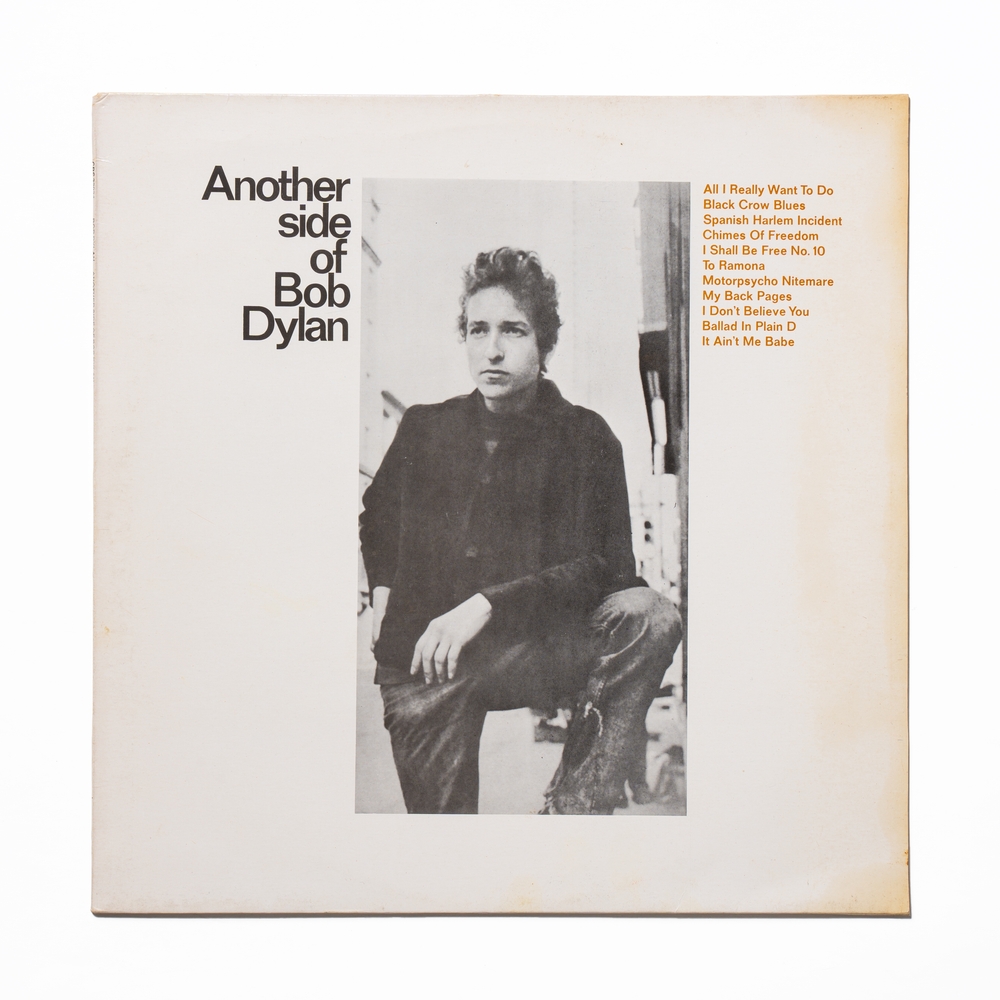
Dylan Cover: My Back Pages

“Ah, but I was so much older then, I’m younger than that now.”

These lyrics and the refrain popped into my head a few mornings ago. This sort of thing has been happening to me frequently these days: Long-forgotten songs resurfacing. It may be a function of the aging process, or it might be the universe talking to me. I kind of hope it’s the latter.

In the 1970s, a group called the Bryds covered a few Bob Dylan songs. They made songs like Mr. Tambourine Man and this one popular. The Bryds’ cover of Mr.Tambourine Man went to number one on the US charts, and their cover of My Back Pages went to thirty. I may have never listened to My Back Pages had it not been for The Byrds. By the way, Roger McGuinn and The Byrds are credited with starting the Folk Rock Revolution. And they inspired Bob Dylan to go electric.

In 1964, Dylan released his fourth album, “Another Side of Life.” Around this time, he began to distance himself from his earlier songs. He claimed his earlier work was not about politics. Instead, it was about universal themes and not individual political issues. In “My Back Pages,” Dylan lambasts himself for his authoritarianism and arrogance.

Moving forward, Dylan’s music focused more on individual consciousness and personal freedom. He is remembered more for his music from 1965-1970 than his earlier work.

To me, the lyrics at the top infer that we tend to think we know it all at a young age. I know that I did. As we age, we gain more wisdom and realize that we know less than we thought we did. This understanding opens us to learning more when we admit that we know little in comparison to what is out there. To be open to learning without imposing pre-existing ideas is to become more pliable and, therefore, young.

Here’s my cover of this powerful song.

Categories
acoustic guitar Arts & Entertainment folk music Music

Cat Stevens: Wild World

Cat Stevens wrote and recorded quite a few hits at the Zenith of his career in the 1960s and 1970s. Stevens is an exceptionally talented artist. His songs began to climb the charts in his native England when he was only eighteen. There is a recurring theme in Stevens’ work about leaving home to go out into the world. In Stevens’ words:

“Wild World has to do with leaving, the sadness of leaving, and the anticipation of what lies beyond. There is a criticism sometimes of my music that it’s kind of naïve, but then again, that’s exactly why people like it. It goes back to the pure childish approach of seeing things almost for the first time.”

I’ve covered several of Stevens’ songs on this blog, including “On the Road to Find Out,” “Fill My Eyes,” and “The Wind.” I’m a huge fan. Stevens’ songs still inspire me some sixty years after their release. Here’s my cover of another popular CS song: “Wild World.”

Categories
acoustic guitar Arts & Entertainment folk music Music

Back On The Street Again

Steve Gillette released his first album in 1967 titled simply “Steve Gillette.” Top-heavy with folk ballads and original songs, I thought the album was a strong debut. Gillette had already established himself as a noteworthy songwriter when Ian and Sylvia, a top Canadian folk duo, included “Darcy Farrow,” a song Gillette co-wrote, on their 1966 album “Early Morning Rain.”

I still own Gillette’s debut album and listen to it occasionally. Despite all of this fanfare, Steve Gillette never became a household name. Some say Gillette’s obscure status is the result of his emergence towards the end of the folk music boom. I don’t buy the idea. For reasons unknown, some people never make it to stardom, no matter how much they want it. Gillette wanted it, but his music failed to resonate with audiences broadly enough to make him a bonafide star. He made several more albums and eventually married Cindy Magnuson. To this day, the duo continues to tour relentlessly and make a modest living with their music.

There are those who did make it big in the sixties, like two of my folk/pop favorites: Jackson Browne and Gordon Lightfoot. Still, Gillette has left us with a number of original and memorable songs. “Back On The Street Again” is one of them. Here’s my cover.

Categories
artists Arts & Entertainment folk music Music

The Summer Side of Life

“Summer Side of Life” is the lead-off song from a 1972 Gordon Lightfoot concert in London, England. The song kept rolling around in my head until I decided to learn it and post it here.

Ostensibly, the song is about a young man who returns from the Vietnam War and mourns a lost love and possibly his war experiences. It’s a song about before and after, and maybe two sides of life. After the first two verses, I find the lyrics to be somewhat impenetrable. So, I can’t say for sure what the song is about, but it speaks to me about the difference between youth and old age.

I’d love to have my youth back with my current perspective and the freedom to follow my bliss, as Joseph Campbell says. Wouldn’t it be lovely to have decades to develop ourselves and our abilities without the distraction of economic necessity? Ahhh…if it could only be so.

It’s been fun learning this song. I hope you enjoy it.

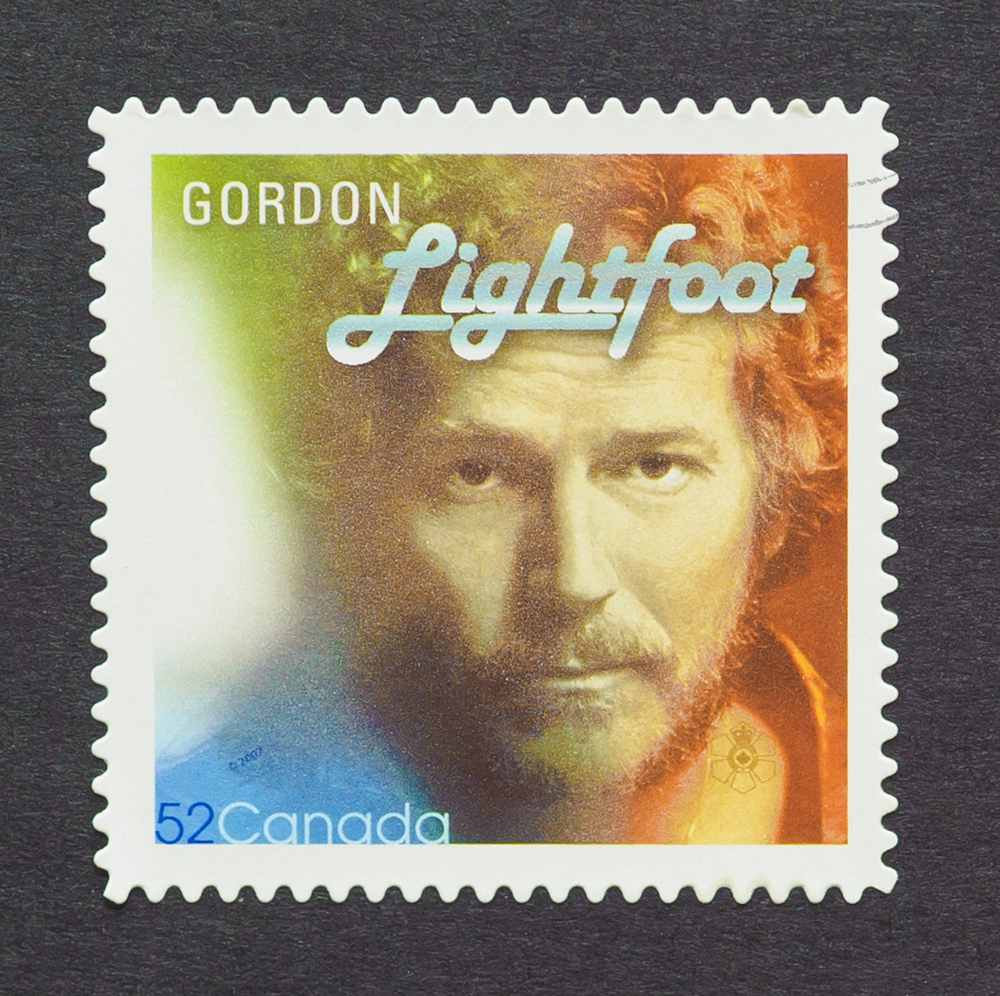
Did they really make a Canadian stamp imprinted with a portrait of GL as a young man?

Categories
Arts & Entertainment Folk Guitar folk music

The Beauty of the Bells

Have you heard of Steve Gillette? If you were alive in the 1960s and liked folk music, there’s a chance the name rings a bell. Gillette never reached the top of the charts, but he’s a very talented singer/songwriter. Many of his songs have been performed by artists you have heard of, including John Denver, Gordon Lightfoot, Ian and Sylvia, Nanci Griffith, and Linda Ronstadt.

The Bells in the Evening appears on Gillette’s debut album released in 1967. The album, simply titled “Steve Gillette,” stands as one of Steve’s finest recordings. “The Bells” is a bittersweet (actually sweet bitter) song of love blossoming in the spring and fading away in the fall. It’s a song full of immense joy and sorrow that combine in a mixture of incredible beauty. The song is also replete with imagery. When you listen, what images come to your mind?

I’ve revisited “The Bells of the Evening” adding some embellishments and the sound of my new guitar. Here’s my cover.

Categories
Arts & Entertainment folk music Music

Early Lightfoot Love

Photo by Vadim Boichenko

“Song for a Winter’s Night” is one of Gordon Lightfoot’s earliest love songs. It is also one of his biggest hits.

As folk music became commercially viable in the late sixties, clubs blossomed featuring promising folk musicians. Gordon Lightfoot landed a job in one of them in downtown Toronto. He stood apart from the crowd because he performed many of his own songs in a characteristically pure voice. After he developed a following, a club owner invited Lightfoot to perform at his club across the street at twice the salary. Lightfoot gratefully accepted the invitation to perform at the Riverboat, Toronto’s premier folk music club.

With his beautiful voice and prolific outpouring of quality music, it was only a matter of time before Warner/Reprise records rewarded Lightfoot with a one million dollar recording contract, an unheard-of number for a Canadian singer.

Lightfoot recorded “Song for a Winter’s Night in 1967 on his album, “The Way I feel.” Many recording artists covered it, including Sarah McLachlan in the soundtrack for the film “Miracle on 34th Street.”

Gordon wrote the song on a hot summer night while performing in Cleveland. He missed his wife at the time, Brita Ingegerd Olaisson, and his thoughts turned to winter. Here’s my cover.

Categories
acoustic guitar artists Arts & Entertainment folk music Music

Across the Barrier of Time

I’ve always wanted to learn Kate Wolf’s guitar-picking style. Granted, she plays every song she’s written differently, but I just wanted a glimpse. Since Kate has mostly been an under-the-radar, brilliant singer/songwriter, no one has taken the time to create an accurate tutorial of her guitar method. That is until now. My go-to-teacher, Jerry Lamberth, best known for his unequaled guitar tutorial site (Jerry’s Guitar Bar) has finally posted the first of what I hope will be many lessons of Kate Wolf’s songs.

I’ve recorded Kate Wolf’s remarkable story and several of her songs on previous blogs. To learn more about this courageous and uniquely talented person, go to: “An Unfinished Life” “Gentle Love” “Feeling the Heart” and “Through Her Music”.

We lost Kate almost forty years ago to Leukemia, but her music has endured across the barrier of time. Coincidentally, the song is about memories of times past.

Not surprisingly, “Across the Great Divide” is one of Wolf’s most popular songs. Without Jerry’s help, I would never have figured out how to play the song Kate’s way. She uses a simple and at the same time complex alternating base method the likes of which I’ve never seen.

Kate wrote “Across The Great Divide” specifically for Robbie Osman’s folk-oriented show of the same name on KPFA radio, San Francisco. Robbie and Kate were friends who shared similar experiences.

This exercise might be a case of “careful what you wish for.” I busted my ass and fingers to learn this. Here’s my cover of the song.

If you love life with abandon, everything you want will come to you quickly and freely.

Categories
acoustic guitar Arts & Entertainment folk music Music

If You Could Read My Mind

I’m watching an interesting film titled “If You Could Read My Mind.” The Canadian documentary is about the life and career of Gordon Lightfoot.

Lightfoot arrived in downtown Toronto as a young man after growing up in Oridella, a small rural Canadian town. Since there were no clubs to play in at the time, Gordon landed a job in a bank to earn a living. Lightfoot was about to earn a promotion when he told his manager that he had decided to leave the bank to accept a role as an extra on a square dancing Canadian TV show. Lightfoot’s manager found it hard to believe that the young man was leaving a good job with a future to go square dancing.

As folk music became commercially viable in the late sixties, clubs began to spring up featuring promising musicians. Gordon landed a spot in one of them. He stood apart from the crowd because he performed many of his own songs in a characteristically pure voice. After he developed a following, a club owner invited Lightfoot to perform at his club across the street at twice the salary. Lightfoot gratefully accepted the invitation to perform at the Riverboat, Toronto’s premier folk music club.

With his beautiful voice and prolific outpouring of quality music, it was only a matter of time before Warner/Reprise records rewarded Lightfoot with a one million dollar recording contract, an unheard-of number for a Canadian singer. His first album with the new label was released in 1970 when Gordon was forty-two. Lightfoot had left United Artists after five albums because he felt they did not represent him adequately. “Sit Down Young Stranger” shipped 80,000 copies before sales stopped dead. The album “had no legs” in the industry’s parlance. Warner changed the name of the album and picked a new single to lead it off. “If You Could Read My Mind” became a runaway hit when an announcer on an important local radio station kept playing it. Sales of the album ballooned to 650,000 copies. The rest is history.

Here’s my cover of the song.

Gordon Lightfoot is not a “legend in his own mind” as Dirty Harry said about the perp he was about to blow away. Lightfoot is a genuine “legend in his own time.” He has been performing live well into his seventies and beyond. It is said that time waits for no man. Time may have made an exception in Mr. Lighfoot’s case.

Categories
Arts & Entertainment Folk Guitar folk music Music

Back Story: “Early Morning Rain”

In 1964, Gordon Lightfoot wrote one of his most memorable songs: Early Morning Rain. Lightfoot, a Canadian singer-songwriter, has become a folk legend. Along with his crystal clear singing voice and accomplished guitar playing, Lightfoot has written a library of outstanding folk songs depicting historical events and all manner of love relationships. To single out a smattering of Lightfoot’s top hits is to do the man an injustice. “Early Morning Rain” appears on his 1966 debut album Lightfoot! Before he released the song, another Canadian duo, Ian and Sylvia, recorded it in 1964. Many other folk singing notables (Peter, Paul, and Mary) also adopted the song.

The genesis of “Early Morning Rain” can be traced to Gordon’s 1960 stay in Westlake, Los Angeles. At the time, Lightfoot became homesick for his Canadian roots. He remembers going to the Los Angeles International Airport on rainy days to watch the aircraft take off and land. The memories of the flights launching into the overcast skies stayed with him. In 1964, while caring for his 5-month-old son, Lightfoot remembers thinking, “I’ll put him over here in his crib, and I’ll write myself a tune.” In that moment, “Early Morning Rain” was born.

The lyrics refer to someone down on his luck who stands at an airport fence to watch the thunderous take-off of a Boeing 707 airliner. The theme of the song suggests a jet-age musical allegory to a hobo of bygone days loitering at a railroad yard to steal a train ride home. Lightfoot credits the popularity of the song to his steady improvement as a songwriter.

I’ve always loved this song. Lightfoot strums it. When I heard Eva Cassidy perform the song using a picking technique, I had to learn it her way. Unfortunately, there were no guitar tutorials available. Since Eva plays “Early Morning Rain” close to her version of “Kathy’s Song,” I was able to figure out how to play EMR three-quarters of the way she does.

Why do I bother to learn how to play these songs the way these great artists do? It’s simple. I become a better guitarist with each song I learn. Most importantly, I enjoy it immensely. Here’s my cover of the song.

Thought for the Day

Am I doing the world a favor if I add one more sad voice to the wailing, no matter how artfully I express it?

Categories
Arts & Entertainment folk music memories Music

The Clancy Brothers: Re-Imagining Irish Folk Music

The Clancy Brothers Wore Aran Jumpers On Stage
A Little Boy Wearing an Aran Jumper

Paddy and Tom Clancy came to America intending to develop lucrative acting careers. Little did they know they were destined to succeed enormously in the music business while making a tremendous contribution to the form, awareness, and appreciation of classic Irish folk music.

After arriving in Greenwich Village in 1951, the enterprising duo quickly established themselves as successful Broadway, Off-Broadway, and television actors. During this period, the brothers also created their own theater production company which they named: “Trio Productions.” To help raise money for the new company, Tom and Paddy sang old Irish folk songs they had learned as children. They rented The Cherry Lane Theater in the Village and performed shows regularly on Saturday nights. Soon, they were joined by notable folk singers like Pete Seeger, Woody Guthrie, and Jean Ritchie.

Liam, the youngest of the three brothers, came to America in 1956. He joined his brothers in the singing group, along with his good friend, Tommy Makem. The group came to be known simply as “The Clancy Brothers and Tommy Makem.” The group distinguished themselves with their rousing style of singing Irish folk songs and ballads, while staying true to some of the slower and more mournful tunes.

The group adopted a trademark uniform after their mother, it is said, read about the inclement New York winters. She sent her boys Aran jumpers (sweaters) to keep them warm. The boys wore the sweaters for the first time at the Blue Angel nightclub in Manhattan as part of their regular winter attire. The group’s manager, Marty Erlichman, had been searching for a kind of logo-look for the group. When he saw the sweaters, he knew he had found the “special look” he was searching for. Erlichman asked the group to wear the sweaters for their first TV appearance on the Ed Sullivan Show. After that appearance, the Clancy Brothers and Makem wore the sweaters whenever they performed.

The Sullivan TV appearance aired to an audience of forty million. The TV show and the group’s nightclub appearances attracted the attention of a Columbia Records executive. They signed a $100,000 recording contract (a staggering sum at the time) with Columbia and recorded seven albums with the studio. While the members of the group changed from time to time, their success and influence on modern folk music has endured. In all, the group recorded 24 albums on various labels. In 1964, their albums accounted for one third of all the record albums sold in Ireland.

I first saw the Clancy Brothers at Carnegie Hall when I was a callow lad of seventeen. I went to the concert with my best friend. He remains my best friend today, even though he is half a world away. The song I’m about to sing has two names: “Will Ye Go Lassie Go” and “The Wild Mountain Thyme.” It’s a Clancy Brothers favorite. This one’s for you, Danny Boy.